
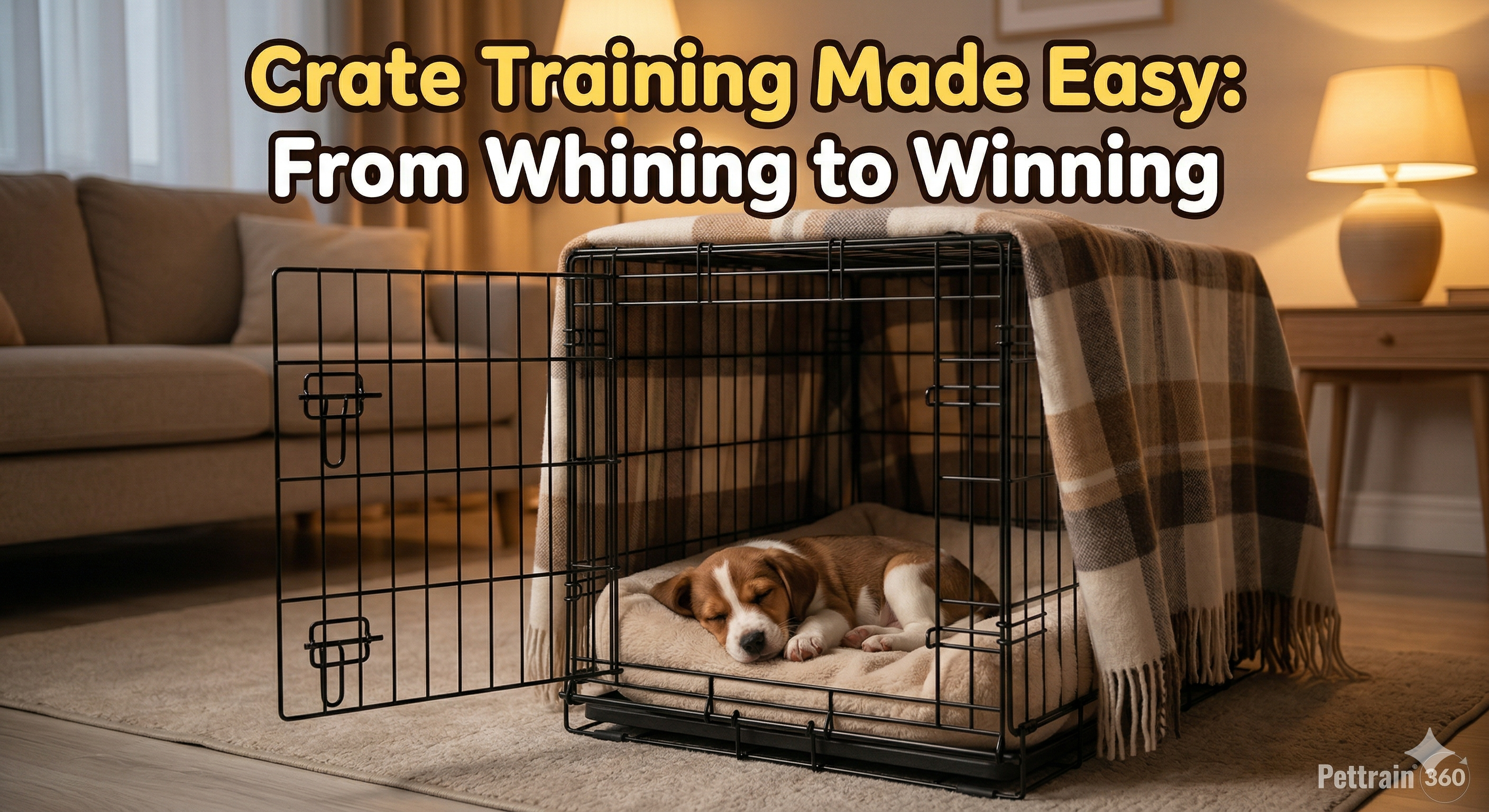
Crate Training Made Easy: How to Stop the Whining and Build a Safe Haven
For many new dog owners, the crate is a source of guilt. It feels like putting your best friend in a cage. However, this is a human projection. Dogs are naturally den animals; they instinctively seek out small, enclosed, and safe spaces to rest and recover.
When introduced correctly, a crate becomes your dog's personal bedroom—a sanctuary they will happily retreat to when they are tired or overwhelmed. At Pet Train 360, we consider crate training a foundational life skill. It aids in potty training, prevents destructive chewing, and keeps your puppy safe when you can't supervise them.
If your puppy is crying, howling, or panicking in their crate, you likely moved too fast. Here is how to hit the reset button and crate train the right way.
1. Never Use the Crate for Punishment
If you use the crate as a "time-out" zone when you are angry, your dog will associate it with negative emotions. The crate must be the happiest, safest place in the house. Never force your puppy inside, and never lock them in immediately after scolding them.
2. Play the "Treat Toss" Game
Start with the crate door propped open. Casually toss a high-value treat just inside the doorway. Let your puppy step in, eat it, and step right back out. Praise them warmly. Gradually toss the treats further toward the back of the crate. Do this for 5-10 minutes a day. You are building a powerful association: Great things happen inside this box!
3. Feed All Meals in the Crate
Food is the ultimate motivator. For the first few weeks, serve your puppy's breakfast and dinner inside the crate. At first, leave the door wide open while they eat. After a few days, close the door while they are eating, but open it the exact second they finish. Gradually leave the door closed for a few minutes longer after each meal to build their tolerance.
4. The "Stuffed Kong" Strategy
When you need your puppy to stay in the crate for a longer duration, give them a project. Stuff a durable chew toy (like a Kong) with peanut butter, plain yogurt, or wet food, and freeze it. Give this high-value item to them only when they are in the crate. The act of licking is naturally soothing to dogs and will help them settle into a nap.
5. Handling the Nighttime Whining
If all their needs are met (they have gone potty, they are not thirsty, and they are not hurt), you must ignore the attention-seeking whining. If you open the door to comfort a crying puppy, you have just trained them that whining is the magic key to unlock the door. Wait for a moment of complete silence—even if it's just three seconds—before you open the door to let them out.
Building Independence
Crate training is an exercise in building your dog's confidence and independence. Take it slow, keep it positive, and never rush the process.
Master the Basics: Understanding canine psychology makes all the difference. Check out our Foundations of Positive Reinforcement module on your Pet Train 360 dashboard to learn more about how your dog's mind works, and start setting them up for a lifetime of success!