
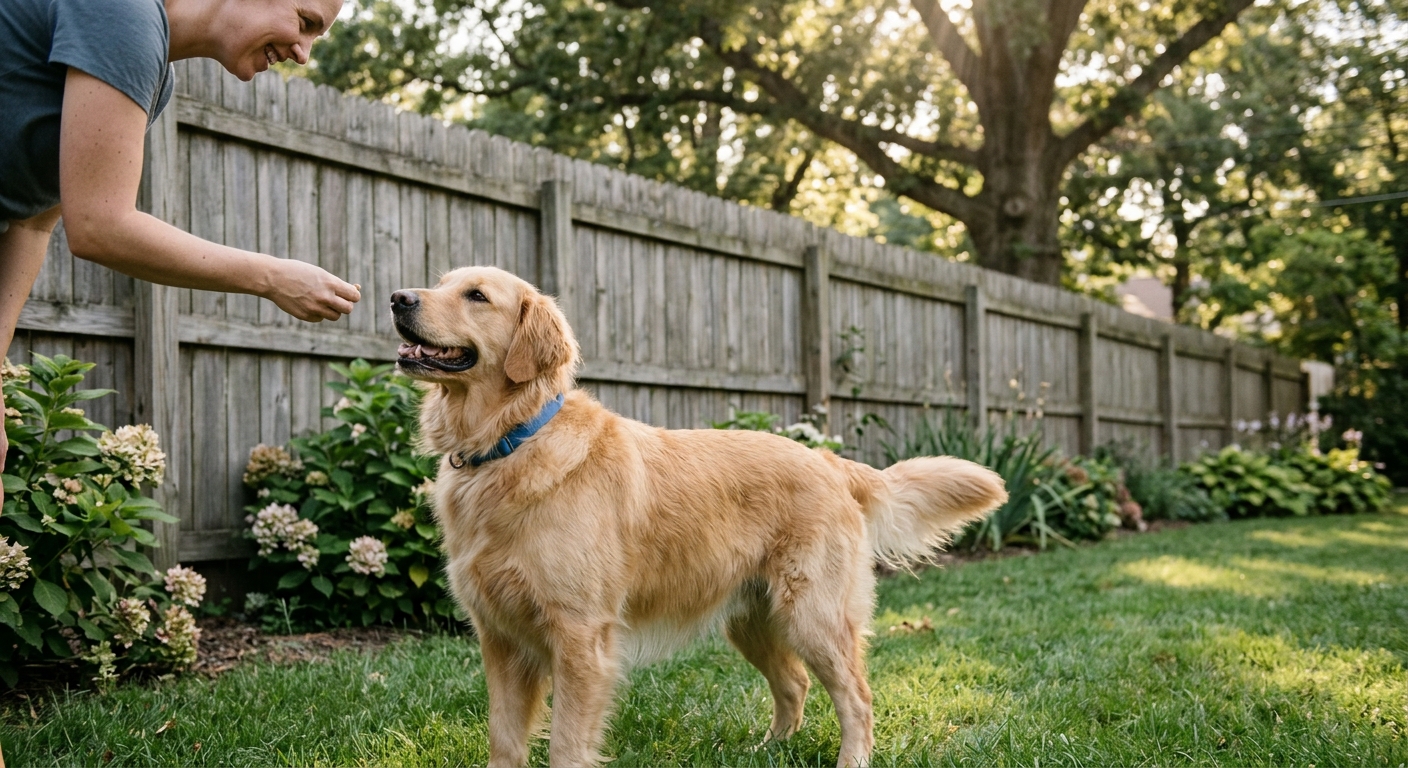
Rescue dog training online gives newly adopted dogs a calm, structured start at home: decompression first, then simple routines, trust-building, house manners, and core cues taught with positive reinforcement at your dog's pace. Because rescue dogs often arrive with unknown histories, training in your own home helps them learn where they will actually live. PetTrain360 offers on-demand video courses from certified trainers, with a free account to start and a Pro plan that unlocks the full library, including anxiety and reactivity courses.
Bringing home a rescue dog is exciting, and it can also be a little uncertain. You may not know how your dog was raised, what they have been taught, or what makes them nervous. Some rescues settle in quickly. Others hide, pace, pull on the leash, or have accidents in the house for a while. Rescue dog training online lets you follow a proven, step-by-step plan from your living room, so your dog learns in the place where good habits matter most.
This guide explains how to train a rescue dog at home, what to work on first, and how PetTrain360 can support you through the early weeks and beyond.
Why rescue dogs benefit from a structured plan
Rescue dogs come from many backgrounds: shelters, foster homes, strays, or previous families who could not keep them. That variety means two rescue dogs of the same age and breed can need very different things. A structured plan helps because it:
- Builds predictability. Consistent routines help a dog who has been through changes feel safer.
- Starts with trust. Positive reinforcement teaches your dog that you are a source of good things.
- Lets you go at your dog's pace. A step-by-step course lets you repeat lessons until your dog is ready to move on.
- Prevents small problems from growing. Teaching house manners early is easier than fixing habits later.
Why online training works well for rescue dogs
Many newly adopted dogs are not ready for a busy group class. New places, unfamiliar dogs, and strangers can be overwhelming in the first weeks. Online training brings the lessons home:
- Low-stress learning. Your dog practices in a quiet, familiar space.
- Real-life setting. House manners, crate or rest-area routines, and greeting habits are taught where they happen.
- Flexible timing. Watch a short lesson and practice for a few minutes whenever your dog is relaxed.
- Repeat anytime. Rewatching a lesson before a session helps you stay consistent.
Group classes can be a great next step later, once your dog is comfortable and ready.
Week by week: what to focus on first
Many adopters use the "3-3-3" guideline as a loose way to think about adjustment: roughly the first few days of decompression, the first few weeks of learning routines, and the first few months of feeling at home. Every dog is different, so treat it as a guide rather than a schedule. Our article on the 3-3-3 rule for adopting a dog explains it in more detail.
The first days: decompression
Keep life quiet and simple. Limit visitors, keep outings short, and give your dog a comfortable rest area. Focus on observing your dog and letting them settle rather than teaching lots of new skills.
The first weeks: routines and basics
Set consistent times for meals, potty breaks, walks, and rest. Begin short, positive training sessions with name recognition, "sit," and coming when called indoors.
The first months: confidence and manners
Build on the basics with loose-leash walking, polite greetings, and gradual exposure to new places. Keep sessions short and fun.
Core skills to teach your rescue dog
Name recognition and focus
Say your dog's name in a happy voice and reward when they look at you. This simple game builds attention and makes every other skill easier.
House training
Even dogs who were house-trained before may have accidents in a new home. Take your dog out frequently, especially after meals, naps, and play, and reward success outside. Treat your rescue like a beginner at first.
A calm rest spot
Teach your dog to settle on a mat or bed. Some dogs enjoy a crate, while others relax better in a gated area. Choose what keeps your dog comfortable.
Recall
Start indoors with short distances and high-value rewards. Many rescue dogs have unknown recall skills, so use a leash or long line outdoors until recall is reliable.
Loose-leash walking
New environments can make rescue dogs pull, freeze, or zigzag. Practice in quiet areas first and reward your dog for staying near you.
Handling and gentle care
Pair touching paws, ears, and collar with treats so grooming and vet visits become easier over time.
Self-control cues
Skills like "leave it" and "wait" help with everyday safety and build calmer habits around food, doors, and toys.
Reading your rescue dog's body language
Understanding how your dog communicates helps you know when to keep going and when to take a break. Signs of stress can include lip licking, yawning, turning away, a tucked tail, or freezing. Signs of relaxation often include a loose body, soft eyes, and a relaxed mouth. If your dog seems stressed, make the exercise easier or end the session on a success. Our dog body language cheat sheet is a helpful reference.
Common challenges with newly adopted dogs
Shyness or fear
Let your dog approach new people and things at their own pace. Reward brave choices and avoid forcing interactions.
Trouble being alone
Some rescue dogs struggle when left alone in a new home. Practice short, calm absences and build up gradually. Our guide to dog separation anxiety training online covers a step-by-step approach.
Leash reactivity
A dog who barks or lunges at other dogs or people on walks may be feeling worried or frustrated. Increase distance, reward calm behavior, and consider a structured course for reactivity.
Resource guarding
If your dog stiffens or growls around food, toys, or resting spots, give them space and avoid taking items away. Trading for a high-value treat and managing the environment can help while you train.
If your dog shows sudden behavior changes, pain, or serious aggression, start with your veterinarian. A veterinarian or veterinary behaviorist can rule out medical issues and advise on additional support.
Tips from foster-to-adopt transitions
If your dog came from a foster home, ask the foster family what routines, cues, and comforts your dog already knows. Keeping familiar food, a favorite toy, or a similar schedule can make the transition smoother. Our article on helping a shelter dog settle into a forever home has more ideas.
How PetTrain360 helps rescue dog owners
PetTrain360 is an on-demand dog training library with 100+ video courses from certified trainers, built around positive reinforcement. For newly adopted dogs, that means:
- Step-by-step foundation courses for core cues, house manners, and everyday routines.
- Anxiety and reactivity courses in the Pro plan, led by Dr. Emily Chen, DVM, a veterinary behaviorist.
- Stream anywhere on your phone, tablet, or TV, so you can review a lesson right before practice.
- Progress tracking and certificates with Pro to help you stay consistent.
- Direct trainer Q&A with Pro, so you can ask questions as your dog settles in.
You can start with a free account that includes introductory courses, with no credit card required. When you are ready for the full library, the Pro plan is listed at $8 per month, with an annual option. See current details on the pricing page.
Frequently asked questions
Can you train a rescue dog online?
Yes. Online training lets you teach your rescue dog at home, in a calm and familiar environment. Step-by-step video lessons help you build routines, trust, and core skills at your dog's pace.
What should I teach a rescue dog first?
Start with decompression and routines, then teach name recognition, house training, a calm rest spot, and simple cues like "sit." Add recall, leash walking, and self-control skills as your dog becomes comfortable.
How long does it take a rescue dog to adjust?
It varies by dog. Many adopters use the 3-3-3 guideline as a rough guide: a few days to decompress, a few weeks to learn routines, and a few months to feel at home.
Should I take my rescue dog to group classes?
Group classes can be helpful once your dog is relaxed in new places. In the first weeks, many rescue dogs do better learning at home before adding busier environments.
Does PetTrain360 have courses for anxious or reactive rescue dogs?
Yes. The PetTrain360 Pro plan includes anxiety and reactivity courses led by a veterinary behaviorist, along with progress tracking and direct trainer Q&A.
Can I try PetTrain360 for free?
Yes. A free account includes introductory courses with no credit card required, and you can upgrade to Pro whenever you want the full library.
Start rescue dog training online with PetTrain360
Your rescue dog's new life starts with patience, routine, and kind, consistent training. PetTrain360 gives you step-by-step lessons from certified trainers that you can follow at home, at your dog's pace. Create your free PetTrain360 account and help your rescue dog settle in with confidence.