
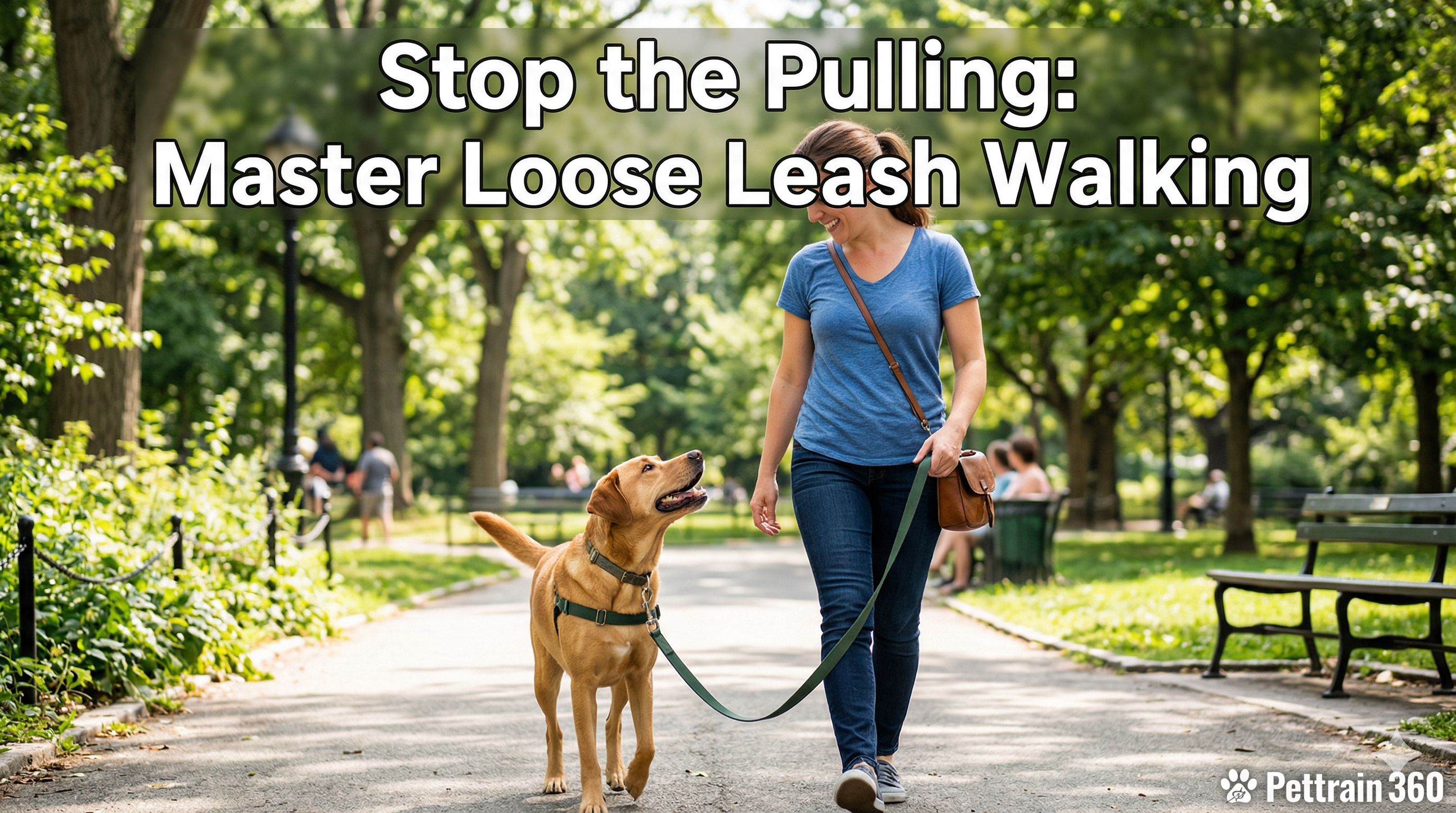
Stop the Pulling: The Ultimate Guide to Loose Leash Walking
We’ve all seen it—or experienced it ourselves. A dog practically choking themselves at the end of a leash, dragging their exhausted owner down the sidewalk. If your daily walks feel more like a tug-of-war match, you are dealing with one of the most common behavioral issues in dog ownership.
Here at Pet Train 360, our head trainer Ken teaches that leash pulling is rarely an act of dominance. Usually, dogs pull for a very simple reason: it works. When they pull, they get to the fire hydrant, the squirrel, or the other dog faster.
If you want to enjoy relaxing strolls with your furry best friend, it's time to change the rules of the walk. Here is how to master loose leash walking using positive reinforcement.
1. Understand the "Opposition Reflex"
Dogs have a natural instinct called the opposition reflex. When they feel tension or pressure on their chest or neck, their instinct is to lean and pull against it. By pulling back on the leash, you are actually triggering their biological urge to pull harder. The goal is to remove the tension entirely.
2. The "Be a Tree" Method
This is the golden rule of leash training: Forward motion is a privilege earned by a loose leash.
The moment you feel the leash go tight, stop walking completely. Become a tree. Do not yank the leash back; just plant your feet and wait. Eventually, your dog will realize they aren't going anywhere, and they will look back at you or step back, creating slack in the leash. The exact second the leash goes slack, say "Yes!" and begin walking forward again.
3. The 180-Degree U-Turn
If the "Be a Tree" method isn't working because your dog is hyper-fixated on something ahead, use the U-Turn. When the leash goes tight, cheerfully say "Let's go!" and abruptly turn 180 degrees and walk in the opposite direction. When your dog catches up to be by your side, reward them with a high-value treat. This teaches them that paying attention to your location is highly rewarding.
4. Reward the "Sweet Spot"
Don't just react when your dog makes a mistake; proactively reward them when they are doing it right. Keep a pouch of high-value treats (like boiled chicken or hot dogs) on the side you want your dog to walk on. Every few steps they take by your side with a loose leash, drop a treat right at your heel. They will quickly learn that the "sweet spot" next to your leg is a highly profitable place to be.
Patience is the Ultimate Tool
Loose leash walking takes time and immense consistency. Start in low-distraction environments like your living room or backyard before graduating to a busy neighborhood sidewalk.
Want to see these techniques in action? Log into your Pet Train 360 dashboard and dive into the Core Commands and Life Skills module, where Ken breaks down the exact mechanics of a perfect heel so you can earn your Leash Master badge!