
Why Shock and Prong Collars Backfire on Anxious Dogs
As dedicated dog parents, we all want what's best for our furry companions. When our dogs exhibit challenging behaviors, especially those rooted in anxiety, it's natural to seek quick solutions. However, some tools, like shock and prong collars, promise fast fixes but can inadvertently inflict more harm than good, particularly on dogs already struggling with fear and anxiety. At PetTrain360, we advocate for compassionate, science-backed, positive reinforcement methods, and today, we're diving deep into why punitive collars are a detrimental choice for your anxious canine.
Understanding Anxiety in Dogs
Dog anxiety isn't just about a nervous whimper. It can manifest in countless ways: excessive barking, destructive chewing, house soiling, hiding, pacing, trembling, or even aggression. Anxious dogs are often living in a state of heightened stress, perceiving threats where none exist or feeling overwhelmed by everyday situations. Their reactions are often instinctual attempts to cope or create distance from perceived danger.
What Are Shock and Prong Collars?
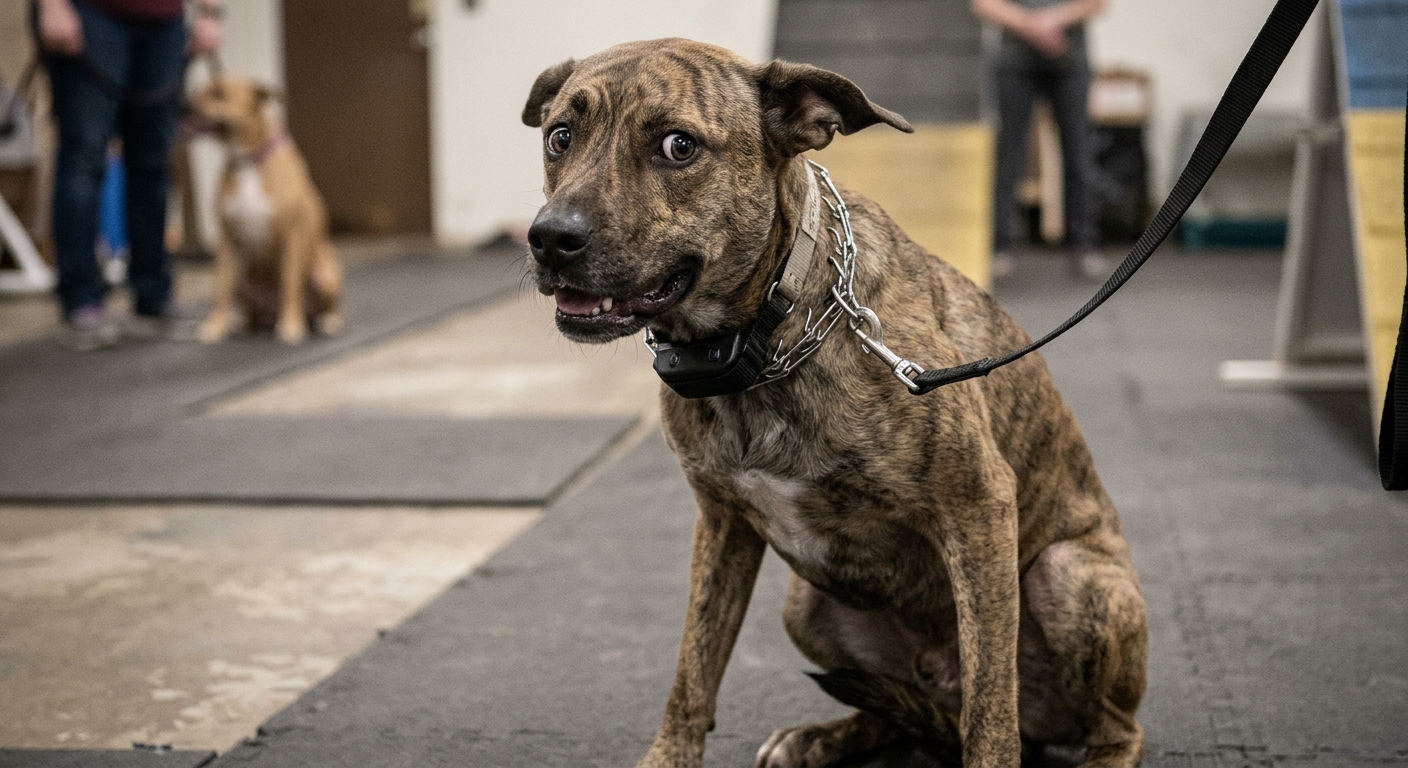
- Shock Collars (E-collars): These collars deliver an electrical stimulation (a "shock") of varying intensity to a dog's neck. They are often marketed as tools for remote correction or containment, but their core function relies on aversion – creating an unpleasant sensation to stop an unwanted behavior.
- Prong Collars (Pinch Collars): Designed with metal links that have blunted prongs pointing inward towards the dog's neck, these collars apply pressure around the neck when the leash is pulled. The idea is that the pressure acts as a "correction" for pulling or other undesirable actions.
The Damaging Impact: Why They Backfire on Anxious Dogs
While some trainers might argue these tools can be effective in certain contexts for specific behaviors (though we strongly disagree), their use on anxious dogs is universally problematic and counterproductive. Here’s why:
1. They Escalate Fear and Anxiety
Imagine being in a constant state of worry, and then suddenly experiencing pain or discomfort when you react to your fears. For an anxious dog, a shock or prong collar adds another layer of unpredictable, unpleasant stimuli to an already overwhelming world. If a dog is shocked every time they bark at a perceived threat (like a stranger or another dog), they don't learn *not* to be anxious; they learn that the presence of that trigger also brings pain. This can intensify their underlying fear, making them even more anxious and reactive over time. This approach fundamentally misses the point that frustrated greeter vs. fear aggressive behaviors stem from very different emotional states.
2. They Damage Trust and the Human-Animal Bond
Your relationship with your dog should be built on trust, safety, and mutual respect. When a dog associates their human, or even the general environment, with painful corrections, that trust erosion. They may become wary of hands reaching for their collar, or hesitant to engage, fearing a potential correction. This is much like why "alpha roll" training is ruining your dog's trust; it uses intimidation, which only creates fear, not understanding or cooperation.
3. They Mask Symptoms, Don't Solve Problems
Punitive tools might temporarily suppress an unwanted behavior, but they don't address the root cause – the dog's anxiety. A dog that stops barking when shocked isn't less anxious; they've simply learned that barking is painful. The underlying fear remains, festering beneath the surface. This is particularly dangerous because if the dog’s warning signals (like growling or barking) are suppressed, they might escalate directly to a bite without any preceding cues. For example, in situations like resource guarding between dogs, suppressing early warnings can lead to more severe conflicts.
4. Risk of Redirected Aggression
When a dog experiences pain or discomfort from a collar while focused on a trigger, they might associate the pain not with their own behavior, but with the trigger itself, or even with the nearest innocent bystander (e.g., another dog, a person, or their handler). This can lead to redirected aggression, where an anxious dog becomes aggressive towards something completely unrelated to their initial fear stimulus.
5. Misidentification of Triggers and Generalization
Dogs are incredibly good at making associations, but not always the ones we intend. An anxious dog, experiencing a shock while on a walk, might associate the shock with a passing child, a bicycle, a specific type of car, or even the entire outdoor environment. This can generalize their anxiety and reactivity to more and more stimuli, making their world even smaller and more frightening. For dogs who already struggle with environments, like those needing guidance on how to walk a reactive dog in a dense urban neighborhood, this can be disastrous.
The Positive Reinforcement Path: Building Confidence, Not Fear
Instead of punishment, PetTrain360 advocates for positive reinforcement, a method that focuses on rewarding desired behaviors and building a dog's confidence and coping skills. This approach is not only humane but far more effective for anxious dogs.
- Counter-Conditioning and Desensitization: These are powerful techniques where you gradually expose your dog to their triggers at a low intensity, pairing the trigger with something positive (like high-value treats). Over time, the dog learns to associate the previously feared stimulus with good things, changing their emotional response. A prime example of this is the "Look at That" game, which can transform a dog’s reaction from fear to anticipation.
- Teaching Alternative Behaviors: Instead of punishing an unwanted reaction, teach your dog a compatible, desirable behavior. For instance, if your dog barks excessively at the doorbell, you can teach them to go to their mat when someone knocks. Our guide on doorbell meltdowns offers a step-by-step approach.
- Enrichment and Mental Stimulation: Anxious dogs often benefit immensely from activities that engage their minds and burn off mental energy. Providing enrichment for puppies (and adult dogs!) through brain games can significantly reduce anxiety.
- Building Foundational Skills: Start with basics. Leash training starts indoors with positive methods, and teaching commands like "Leave It" using rewards empowers your dog.
- Appropriate Equipment: Opt for comfortable, non-aversive equipment like a well-fitting front-clip harness. Learning about teaching your puppy to love the harness sets them up for success from an early age.
- Understanding and Prevention: Addressing anxiety often means understanding its triggers and preventing situations that overwhelm your dog. Similar to how we prevent puppy separation anxiety, proactive management and training are crucial.
Seek Professional, Positive Guidance
If your dog is struggling with anxiety, the best course of action is to consult with a certified professional dog trainer or veterinary behaviorist who exclusively uses positive reinforcement methods. They can help identify the root causes of your dog's anxiety and develop a tailored training plan that fosters confidence, not fear.
At PetTrain360, we believe every dog deserves to feel safe and understood. Choosing positive reinforcement is not just a training method; it's a commitment to your dog's emotional well-being and a pathway to a happier, healthier life together. Step away from punitive tools and step towards a bond built on trust, respect, and joy.