
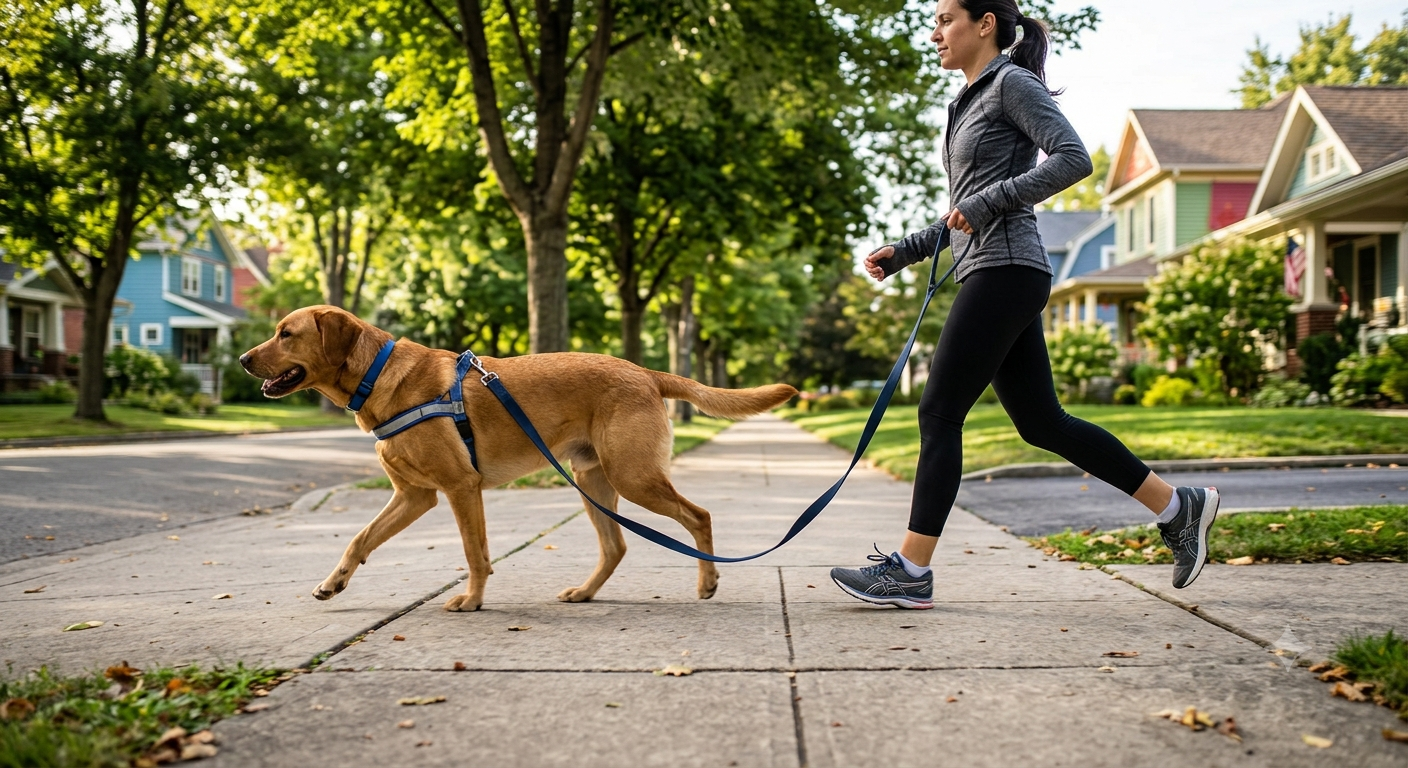
Does your daily dog walk feel less like a peaceful stroll and more like a tug-of-war championship? Do you dream of enjoying a walk with your canine companion without feeling like your arm is about to detach? You're not alone! Leash pulling is one of the most common frustrations for dog owners, but what if we told you the secret to a loose leash walk involves... doing absolutely nothing?
Welcome to the "Invisible Anchor" technique – a positive-reinforcement based method championed by PetTrain360 that will transform your walks from a struggle to a serene experience. This technique leverages your dog's natural desire to move forward and teaches them that a loose leash is the key to getting what they want.
Understanding the Pull: Why Dogs Do It
Before we dive into the solution, let's understand the "why." Dogs pull for many reasons:
- Excitement: The world is a wonderland of smells and sights! They're eager to explore.
- Pace Mismatch: Our natural walking pace is often slower than a dog's trot.
- Learned Behavior: Every time they pull and you continue to move forward, they learn that pulling *works* to get them where they want to go.
- Lack of Training: They simply haven't been taught an alternative.
The good news? We can teach them! And it starts with you becoming an "invisible anchor."
The "Invisible Anchor" Technique: Your Step-by-Step Guide
This method is deceptively simple and incredibly effective. The core principle: a tight leash means "stop," a loose leash means "go."
Step 1: The Setup
- Equipment: A comfortable, flat buckle collar or a well-fitting front-clip harness. Avoid retractable leashes, as they actually encourage pulling by providing constant tension.
- Environment: Start in a low-distraction area like your backyard or a quiet street. Gradually increase distractions as your dog improves.
- Mindset: Bring patience and a positive attitude! You are teaching, not punishing.
Step 2: The Practice
Begin your walk as usual. The moment your dog pulls and the leash tightens even slightly, you become the "invisible anchor":
- Stop Dead in Your Tracks: Freeze. Literally, do nothing. Do not yank, scold, or even speak. Just become a statue.
- Wait for Slack: Do not move forward until the leash goes slack. This might mean your dog turns to look at you, takes a step back, or even sits down. Any movement that creates slack is a win!
- Resume Walking: The instant the leash is loose, even for a second, calmly take a step forward. If they pull again, repeat the freeze.
It might feel like you're taking two steps forward and three steps back initially, but consistency is key. Your dog will quickly learn the correlation: pulling *stops* the walk, a loose leash *starts* it.
Step 3: Add Positive Reinforcement
While the "invisible anchor" is primarily about teaching consequences (pulling = no forward movement), you can supercharge the learning with positive reinforcement.
- Mark and Reward Loose Leash: When your dog walks nicely with a loose leash by your side, mark the behavior with a verbal cue like "Yes!" or a clicker, then offer a high-value treat.
- "Check-in" Treats: Randomly reward your dog for checking in with you or walking beside you, even if they aren't pulling. This builds focus on you.
- Praise: Don't underestimate the power of enthusiastic verbal praise!
For tips on how to phase out food rewards as your dog masters the skill, check out our guide!
Advanced Tips for Leash Manners Mastery
- Change Direction: If your dog is consistently pulling to one side, abruptly change direction. This requires them to pay attention to you and quickly reorient themselves, reinforcing that you dictate the direction of the walk.
- Practice "Heel" or "Walk Nice" Indoors: Before going outside, practice walking nicely by your side in a distraction-free environment using treats. You can even try teaching simple commands like "heel" to family members, including younger trainers.
- Incorporate Sniffing Opportunities: Dogs need to explore with their noses! Instead of a forced march, allow designated "sniff breaks" on a loose leash. This provides mental stimulation and can reduce the urge to pull constantly. Learn more about the power of sniffing and how it tires your dog out more than just running. You can even incorporate scent work games into your walks or daily routine.
- Short, Frequent Sessions: Especially for puppies or easily distracted dogs, keep training sessions short (5-10 minutes) and frequent.
- Be Consistent, Always: Every single walk is a training opportunity. If you let them pull "just this once," you're undoing your hard work. Consistency in setting boundaries is crucial for all aspects of pet training.
The Benefits of a Loose Leash Walk
Beyond simply stopping the pulling, mastering the "Invisible Anchor" technique opens up a world of positive experiences:
- More Enjoyable Walks: For both you and your dog!
- Improved Bond: Your dog learns to trust and communicate with you, fostering a stronger connection.
- Greater Safety: A dog that walks calmly is less likely to dart into traffic or approach other dogs/people inappropriately.
- Access to More Places: A well-behaved dog on a loose leash is welcome in more public spaces, potentially even leading to reduced rent in pet-friendly communities that value responsible pet ownership.
- Reduced Stress: For everyone involved!
Ready to Embrace the Serene Stroll?
The "Invisible Anchor" technique requires patience and consistency, but the rewards are immeasurable. Imagine walking hand-in-paw, enjoying the sights and sounds with your happy, relaxed companion. Start practicing today, and soon you'll be experiencing the joy of a truly balanced walk!