
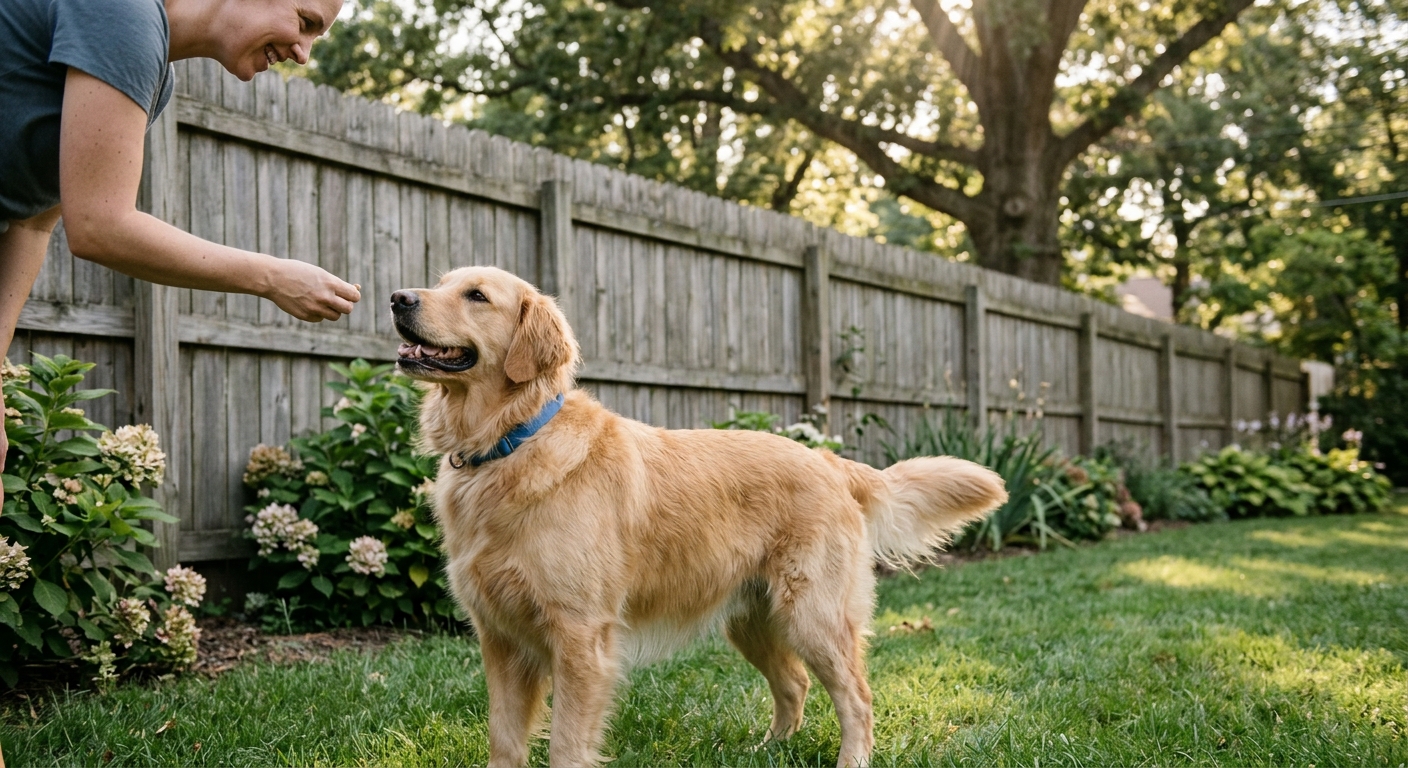
Dog trick training online teaches your dog fun behaviors like spin, shake, bow, roll over, and play dead through short video lessons you follow at home, using positive reinforcement and small steps. Tricks build focus, confidence, and your bond, and they are a great way to tire out a busy dog's brain. PetTrain360 offers on-demand courses from certified trainers, including agility and tricks lessons with Sarah Jenkins, CPDT-KA, and you can start with a free account before upgrading to the Pro plan.
Tricks are more than party pieces. Teaching your dog to spin, bow, or wave uses the same skills as everyday obedience: paying attention, understanding a cue, and trying again when something does not work the first time. Because tricks feel like a game, many dogs and owners find them the most enjoyable part of training.
Online trick training lets you learn exactly how to break each trick into steps, watch a trainer demonstrate it, and practice in short sessions whenever it suits you. This guide explains why tricks are worth teaching, which ones to start with, how to train them step by step, and how PetTrain360 can help.
Why teach your dog tricks?
Mental exercise
A short trick session can be surprisingly tiring for a dog. Learning something new makes your dog think, which helps burn off energy on rainy days or when long walks are not possible. Our 10-minute daily dog training routine shows how short sessions add up.
Stronger communication
Every trick you teach improves how well you and your dog understand each other. Clear cues, good timing, and rewards carry over to everyday manners.
Confidence building
Shy or cautious dogs often grow in confidence as they learn that trying new things earns rewards. Tricks give them lots of small wins.
Better focus
Tricks teach dogs to pay attention to you even when something more interesting is happening, which supports skills like recall and loose-leash walking.
Fun for the whole family
Kids and adults can join in once your dog understands a trick, making training a shared activity instead of a chore.
Useful everyday behaviors
Some tricks are practical too. "Paw" can make nail trims easier, "chin rest" can help with handling, and "go to your mat" becomes a calm place to settle when guests arrive.
Why online trick training works
- Watch the mechanics. Video shows exactly where to hold the treat, how to move your hand, and when to reward, which can be hard to picture from written instructions.
- Train at home. Your dog learns in a familiar space with fewer distractions, which helps with early steps.
- Short, flexible sessions. Practice for a few minutes before work, during a break, or after dinner.
- Replay any time. If a trick is not clicking, rewatch the lesson and adjust.
- Learn at your dog's pace. Some dogs learn "spin" in a session; others need a week. Self-paced lessons mean nobody gets left behind.
Before you start: the trick training toolkit
You do not need much equipment:
- Small, soft treats your dog loves, cut into pieces so you can reward often
- A quiet space with good footing and few distractions
- A marker, such as a clicker or a consistent word like "yes," to tell your dog the exact moment they did it right
- A mat or target object, which is useful for several tricks
- Patience and short sessions, usually a few minutes at a time, ending on a success
If your dog is very food-motivated or tends to grab treats, practicing a little impulse control first helps. Our guide to impulse control games is a great warm-up.
Beginner tricks to teach first
Spin
Hold a treat at your dog's nose and slowly lure them in a circle. Mark and reward when they complete the turn. After several repetitions, make the hand motion smaller and add a cue word just before the motion.
Shake or paw
Hold a treat in a closed hand near your dog's chest level. Many dogs will paw at your hand; mark and reward the moment the paw lifts. Gradually present an open palm and add the cue "shake."
Touch (hand target)
Present your flat palm a few inches from your dog's nose. When they bump it with their nose, mark and reward. This simple trick is a building block for many others and can help guide your dog in everyday situations.
Bow
With your dog standing, lure a treat from their nose down toward their front paws and slightly back. Mark the moment their elbows dip while the rear stays up. Keep sessions short, since this one takes coordination.
Go to your mat
Toss a treat onto a mat, mark when your dog steps on it, and reward. Gradually wait for all four paws, then a sit or down on the mat, before adding the cue.
Intermediate tricks for when your dog is ready
Roll over
Start from a down. Lure your dog's head toward their shoulder so they shift onto one hip, then continue the lure over their back. Reward each small step rather than waiting for the full roll at first.
Play dead
Build from a down and a side-lying position, adding a fun cue once your dog can hold still for a moment.
Weave through legs
Use a treat to guide your dog through your legs in a figure-eight pattern while you stand still, then while you walk slowly.
Back up
Stand in a narrow hallway facing your dog and step toward them slowly. Mark and reward any backward step. Build distance gradually.
Jumps and simple agility moves
Low jumps over a broomstick or through a hoop can be a fun extension once your dog is fit and healthy. Keep heights low and footing safe. If you want to build more, our DIY agility course guide explains how to set up a backyard course.
Always check with your veterinarian before adding jumping or physically demanding tricks, especially for puppies, seniors, or dogs with joint concerns.
Trick training tips that make a difference
- Break it into tiny steps. Reward progress toward the trick, not just the finished version.
- Mark the exact moment. A well-timed "yes" or click tells your dog precisely what earned the treat.
- Fade the lure early. Move from a treat in your hand to a hand signal so your dog does not only perform when food is visible.
- Add the cue last. Say the word once your dog is reliably doing the behavior.
- Keep it short and upbeat. Stop while your dog is still eager.
- Practice in new places gradually. Once your dog knows a trick at home, try it in the yard, then on walks.
- Never force a position. Pushing a dog into a roll or bow can make training stressful. Let your dog figure it out with rewards.
Troubleshooting common trick training problems
My dog loses interest quickly. Shorten sessions, use higher-value treats, and train before meals when your dog is a little hungry.
My dog only does the trick when I have food. Fade the lure, reward from your other hand or a pouch, and occasionally reward with play or praise.
My dog gets frustrated. Go back a step where your dog was succeeding, reward several easy repetitions, and end on a win.
My dog offers the wrong trick. That is a sign your dog is thinking. Calmly reset and make the cue or hand signal clearer.
How PetTrain360 helps you teach tricks
PetTrain360 is an on-demand dog training library with 100+ video training modules from certified trainers, built around positive reinforcement. For trick training, that means:
- Agility and tricks lessons from Sarah Jenkins, CPDT-KA, whose approach makes learning complex tricks approachable for dogs of all ages.
- Foundation courses with certified obedience trainers, so tricks build on solid basics.
- Stream anywhere on your phone, tablet, or TV, so you can watch a demonstration right before a session.
- Progress tracking and badges with Pro to keep you and your family motivated.
- Downloadable training guides with Pro for quick reference during practice.
- Dedicated trainer support with Pro, so you can ask questions when a trick gets stuck.
You can start with a free account that includes introductory courses, with no credit card required. When you are ready for the full library, the Pro plan is listed at $8 per month, with an annual option, and annual plans come with a 30-day money-back guarantee. See current details on the pricing page.
Frequently asked questions
Can you teach a dog tricks online?
Yes. Online lessons show you exactly how to break each trick into small steps and when to reward. You practice at home in short sessions, at your dog's pace, and can rewatch any lesson.
What is the easiest trick to teach a dog first?
Many owners start with spin, shake, or hand touch. These tricks use simple lures, build quickly, and help your dog learn how training games work.
How long does it take to teach a dog a trick?
It depends on the dog and the trick. Simple tricks may come together in a few short sessions, while tricks like roll over or play dead can take longer. Short, consistent practice usually works best.
Can older dogs learn tricks?
Yes. Dogs of many ages can learn new tricks with positive reinforcement. Choose low-impact tricks for seniors, and check with your veterinarian before anything physically demanding.
Do I need a clicker for trick training?
No. A clicker is helpful for precise timing, but a consistent marker word like "yes" works well too.
How much does PetTrain360 cost?
PetTrain360 has a free plan with introductory courses and no credit card required. The Pro plan, listed at $8 per month with an annual option, unlocks the full library, including agility and tricks content.
Start teaching tricks with PetTrain360
Trick training is one of the most rewarding ways to spend time with your dog: it builds focus, confidence, and a stronger bond, and it is genuinely fun. With step-by-step video lessons from certified trainers, PetTrain360 makes it easy to start today and keep improving. Create your free PetTrain360 account and teach your dog their first trick this week.