
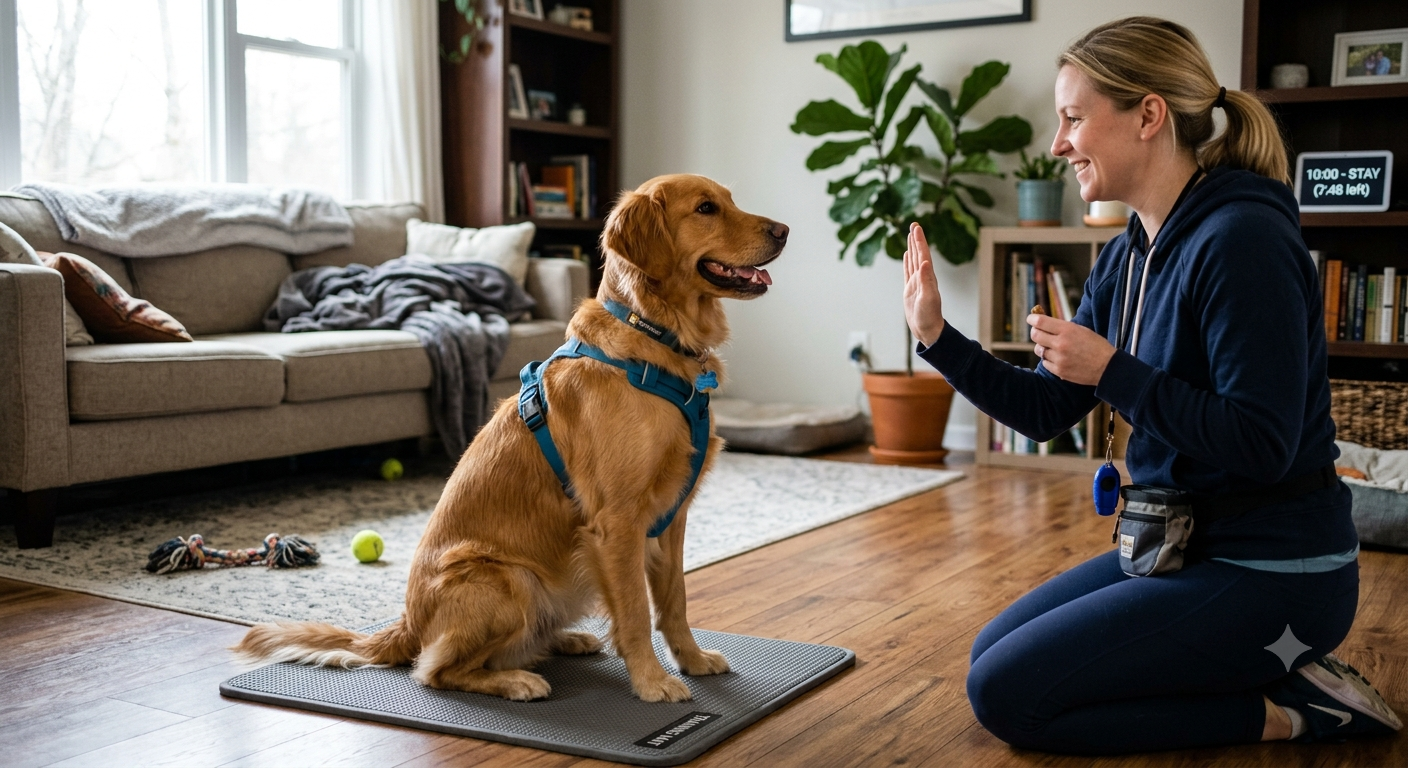
Unleash Their Genius: Why 10 Minutes a Day Transforms Your Dog
As dedicated dog parents, we all want our furry companions to be well-behaved, happy, and mentally stimulated. But let's be honest, finding hours for training sessions isn't always feasible with today's busy schedules. What if we told you that just 10 minutes a day could unlock incredible progress, tire out your dog's brain more effectively than a long walk, and strengthen your bond like never before?
At PetTrain360, we understand the power of consistency and positive reinforcement. Our "Go To" routine isn't about rote commands; it's about engaging your dog's mind, building self-control, and making training a joyful experience for both of you. You might even find that a trained pet could lead to reduced rent, showcasing the real-world benefits!
The Science of "Brain Tire": Quality Over Quantity
Dogs thrive on mental exercise. Just like humans, thinking, problem-solving, and focusing can be far more exhausting (and fulfilling!) than purely physical exertion. A structured 10-minute session taps into this, preventing boredom, reducing destructive behaviors, and building a more responsive, confident dog. It's especially effective when you're working from home with pets and need productive breaks.
This isn't just theory; it's proven in our real success stories, from mastering basics like puppy potty training to advanced obedience.
Structuring Your "Go To" 10-Minute Routine
Here’s how to break down your 10 minutes for maximum impact, focusing on engagement, learning, and fun:
Minute 1-2: The Warm-Up - Focus & Engagement
- Goal: Get your dog's attention, build enthusiasm, and warm up their brain.
- Activities:
- Name Recognition & Eye Contact: Say their name enthusiastically, reward when they look at you.
- Hand Target: Present your open palm, reward when they touch it with their nose.
- Quick Sits/Downs: Rapid-fire known commands for easy wins and positive reinforcement.
- Why it works: Starts the session with success, builds a positive association, and transitions them into learning mode.
Minute 3-7: Core Exercises - Mental Marathon
This is where the real "brain tire" happens! Focus on 1-2 new behaviors or proofing more challenging ones. Keep it varied to maintain interest.
- Goal: Teach new skills, refine existing ones, and challenge their cognitive abilities.
- Activities (Choose 1-2):
- New Command Introduction: Break down a new skill into tiny, achievable steps (e.g., "leave it," "stay").
- Proofing & Generalization: Practice known commands in new environments or with mild distractions. This is crucial for commands like the emergency recall.
- Brain Games: Introduce scent work (find it games with treats), or simple puzzle toys. You could even try a quick round of Hide and Seek if space allows!
- Leash Manners: Practice loose-leash walking indoors or in a quiet area. Learn our "Invisible Anchor" technique to stop leash pulling.
- Why it works: Deep mental engagement requires focus, problem-solving, and self-control, leading to genuine exhaustion.
Minute 8-9: Impulse Control & Real-World Application
Apply their new skills to real-life situations, building self-control and good manners.
- Goal: Reinforce self-control and translate training into everyday behavior.
- Activities:
- "Wait" at a Door: Practice waiting calmly before going through.
- "Leave It" with a Temptation: Use a toy or treat to test their self-restraint. Explore more impulse control games.
- Threshold Manners: Practice staying when someone approaches the door, helping to stop your dog from charging the front door.
- Why it works: These exercises reinforce learned behaviors under mild distraction, proving their understanding. Even commands a 5-year-old can teach benefit from this type of proofing!
Minute 10: The Cool-Down - Relaxation & Reward
- Goal: End on a positive, relaxing note, cementing good feelings about training.
- Activities:
- Massage/Petting: Gentle strokes and praise.
- Chew Toy or Lick Mat: Provide a calming activity to decompress.
- "Find It" Finale: Scatter a few treats for a relaxed sniff and search.
- Why it works: Prevents overstimulation, helps them wind down, and leaves them feeling accomplished and happy.
Maximizing Your 10-Minute Routine: Pro Tips
- Consistency is Key: Try to train around the same time each day to build a routine.
- Keep it Fun: Use high-value treats and enthusiastic praise. Always end on a good note, even if it means doing an easier command they know well.
- Watch for Signals: If your dog is losing interest, shorten the session or switch to an easier task.
- Short Bursts are Okay: If 10 continuous minutes is too much initially, break it into two 5-minute sessions.
- Consider Online Guidance: If you're tackling issues like leash reactivity or want structured learning, explore PetTrain360's on-demand library. Many find that online pet training wins for busy parents.
Ready to Transform Your Dog's Day?
Just 10 minutes a day can make a monumental difference in your dog's behavior, mental well-being, and your shared life. It's an investment that pays off in a happier, more harmonious home. Dive deeper into our methods and resources; check out PetTrain360.com's Pro Plan to get unlimited access to expert-led courses designed for real results.
Start your "Go To" routine today and watch your dog thrive!