
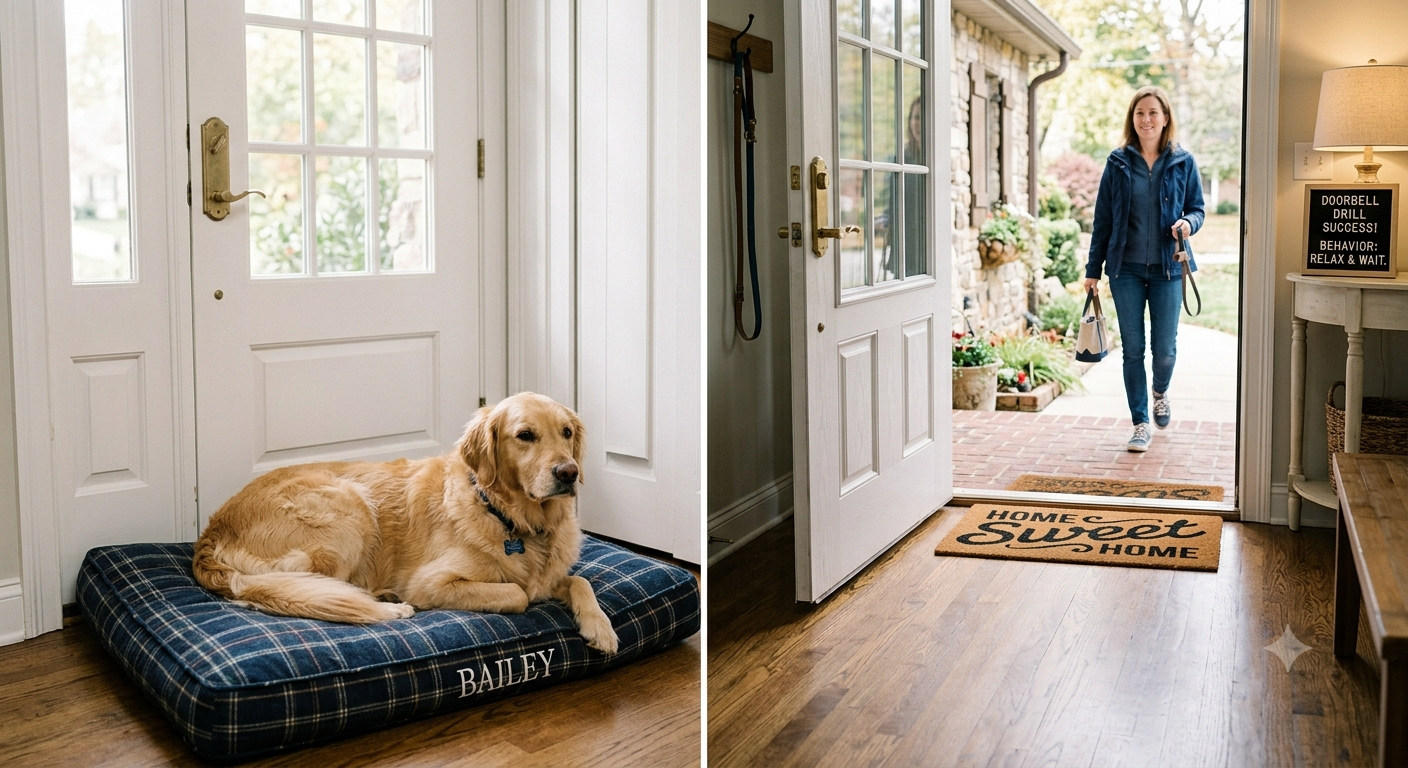
The Doorbell Drill: How to Stop Your Dog from Charging the Front Door
Ah, the doorbell! For many dog owners, that familiar chime triggers not anticipation, but anxiety. The sudden barking, the frantic jumping, the full-speed charge to the front door – it's a scene all too common, and frankly, a bit chaotic. But what if we told you it doesn't have to be this way? At PetTrain360, we believe in transforming these stressful moments into opportunities for positive behavior, and today, we're sharing our ultimate solution: The Doorbell Drill.
Why Do Dogs Charge the Door? Understanding the Behavior
Before we dive into the solution, let's understand the 'why.' Your dog isn't trying to be naughty; they're reacting instinctively. Common reasons include:
- Excitement: New smells, new people, new possibilities! It’s a burst of energy and curiosity.
- Territoriality: Some dogs perceive visitors as an intrusion and feel it's their job to 'protect' their home.
- Learned Behavior: Over time, your dog learns that the doorbell (or knocking) equals a person, and their frantic behavior often gets reinforced, even unintentionally.
- Lack of Impulse Control: Many dogs simply haven't learned how to manage their excitement in a calm, controlled way.
The good news is, just like countless other behaviors, this can be managed and reshaped with consistent, positive reinforcement. We've seen incredible transformations, much like the real success stories from PetTrain360.com that cover everything from puppy potty training to advanced recall.
The Goal: Calm, Controlled Greetings
Our aim isn't to silence your dog completely (a little happy woof is fine!), but to teach them an alternative, calm behavior. Instead of charging, we want them to go to a designated 'place' (like a mat, bed, or crate) and remain there until released. This teaches impulse control, good manners, and makes your home a more peaceful environment.
Before You Begin: Essential Preparations
Success starts with preparation. Gather these essentials:
- High-Value Treats: Think small, soft, and super tasty – chicken, cheese, or specialized training treats.
- A Designated 'Place': This could be a dog bed, mat, or a specific spot in the room. Ensure your dog understands the 'Go to Place' or 'Settle' command reliably in low-distraction environments. If you're struggling, our on-demand library has extensive modules on foundational commands.
- Patience and Consistency: This isn't a quick fix, but a gradual process. Remember that consistency is key to seeing results, even with online dog training for busy parents.
The Doorbell Drill: Step-by-Step
We'll break this down into phases, gradually increasing the challenge. Always work at your dog's pace!
Phase 1: The "Silent" Doorbell (No Actual Sound)
The goal here is to build an association between you approaching the door and your dog going to their place, without the trigger of the doorbell sound itself.
- Have your dog in the room, preferably on a leash initially for control if needed.
- Say "Go to Place" and guide/lure them to their mat. Reward heavily when they get there and settle.
- Walk towards the front door. If your dog stays calmly on their place, turn back, approach them, and reward them generously.
- Repeat, gradually increasing how close you get to the door. If your dog gets up, calmly (no scolding!) guide them back to their place and try again.
This phase is all about building focus and self-control. It's similar to the concentration required for brain games that teach your dog to find your kids, requiring mental engagement and a calm demeanor.
Phase 2: The "Whisper" Doorbell (Low Volume Sound)
Now, we introduce the sound, but at a level where your dog can still remain calm.
- Place your dog on their "place."
- Have a helper (or use a recording on your phone) ring the doorbell or knock very softly.
- The instant your dog hears the sound and stays on their place (or even just pauses their reaction), say "Yes!" or click, and reward them with a high-value treat delivered to their place.
- If they react (bark, lunge), simply wait for them to calm down, guide them back to their place, and try again with an even softer sound.
- Repeat, slowly increasing the volume of the doorbell sound over many sessions and days.
Phase 3: The "Real Deal" Doorbell (Full Sound & Knocking)
Once your dog is consistently calm with a soft doorbell, it's time to up the ante.
- Your dog is on their "place."
- Have your helper ring the doorbell at a normal volume, or knock.
- As soon as your dog hears it and stays calm on their place, reward immediately.
- If they react, calmly reset and try again. Don't move forward until they are consistently calm at this stage.
- Once they are solid with the full doorbell, practice with knocking as well.
Phase 4: Adding Distractions (The Arrival of People)
This is the ultimate test, bringing in the actual sight and sound of a visitor.
- Start with a helper: Your dog is on their place. Helper rings the doorbell, then opens the door slightly, pauses, and closes it (without interacting with the dog). Reward for calm.
- Gradually increase the duration the door is open, then the helper stepping just inside, then fully inside, all while your dog remains on their place. Each step, reward heavily.
- Once your dog is consistently calm with a helper, introduce real visitors. Brief them on the plan: ignore the dog unless they are calm on their place, then they can offer a polite greeting (still no petting if the dog is too excited).
Achieving this level of calm demonstrates the power of consistent training, much like how PetTrain360.com fixes leash reactivity in weeks, proving that even challenging behaviors can be overcome with the right methods.
Troubleshooting and Tips
- Don't Rush: If your dog struggles at any phase, go back to the previous one. Each step must be solid before moving on.
- Be Consistent: Every time the doorbell rings, you need to be ready to practice. Inconsistency teaches your dog that sometimes they can charge and sometimes they can't, which is confusing.
- Reward Liberally: For good behavior at the door, your dog deserves the best rewards!
- Manage Expectations: This isn't about creating a silent, unmoving statue. It's about teaching your dog to choose a calm, appropriate behavior.
Benefits Beyond the Door
Training your dog to stay calm at the door is about more than just polite greetings. It significantly boosts their overall impulse control, which can positively impact other aspects of their life, from walking nicely on a leash (check out our "Invisible Anchor" technique to stop leash pulling) to being a more relaxed companion when working from home with pets. A well-behaved dog is a joy, and their good manners can even lead to unexpected perks, like a reduced rent from landlords who appreciate responsible pet ownership!
Embrace a Peaceful Front Door Today!
The Doorbell Drill might take time and dedication, but the reward – a calm, happy dog who greets visitors politely – is immeasurable. Imagine answering the door without the usual scramble! With positive reinforcement and consistent practice, this dream can become your reality.
Ready to unlock a world of calm and well-behaved pet moments? Explore PetTrain360’s comprehensive training resources. Our Pro Plan, an honest look at our $8/mo plan shows it's truly worth it for dedicated pet parents like you!