
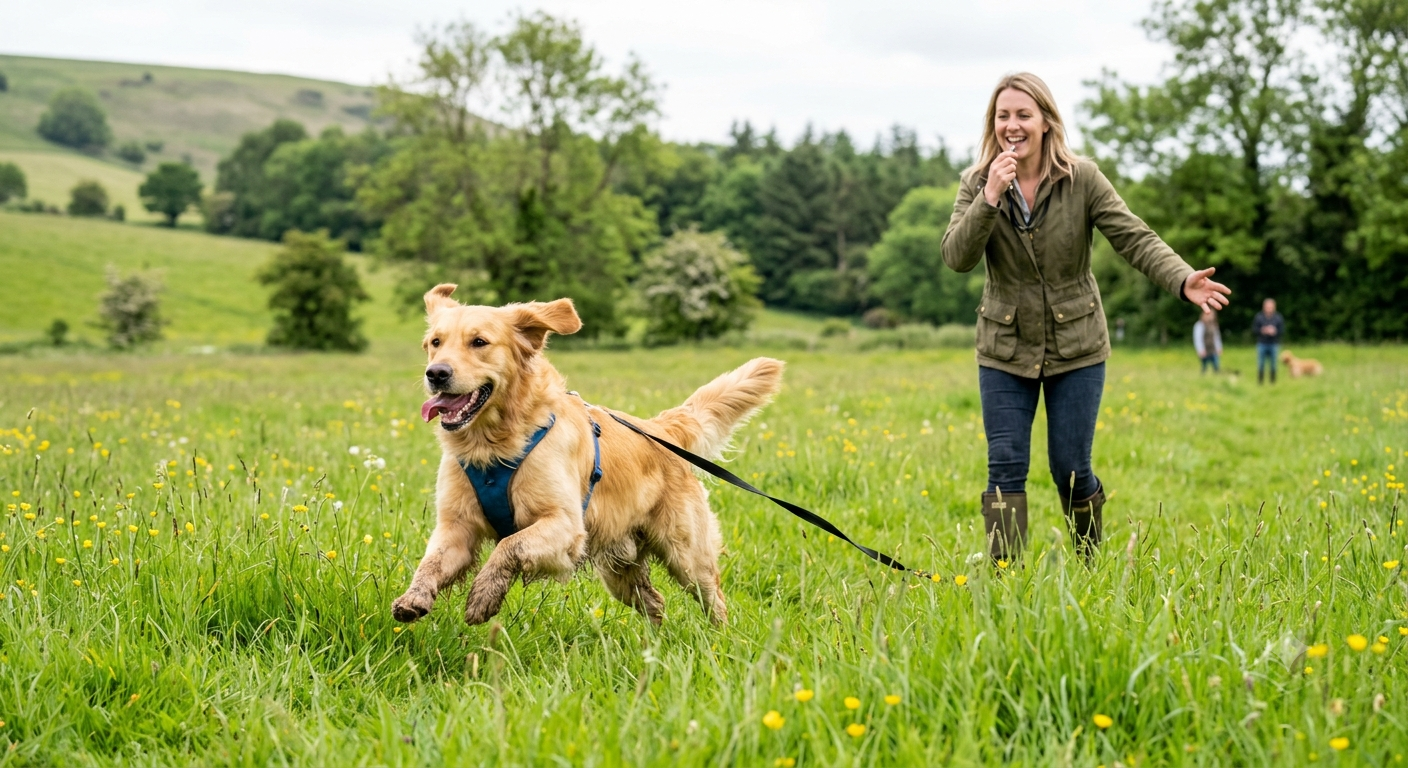
The Emergency Recall: How to Build a "Whistle-Blow" Command Your Dog Can’t Ignore
Every dog owner knows that heart-stopping moment: the unexpected open gate, the squirrel darting across a busy street, or the sudden appearance of an enticing distraction. In these critical seconds, a reliable recall isn't just a convenience – it's a lifeline. But what about the emergency recall? That one command your dog drops everything for, no matter the distraction? At PetTrain360, we call it the "Whistle-Blow" command, and it's an indispensable tool for every responsible dog parent.
What Exactly is an Emergency Recall?
Think of your regular "come" command as a polite request. It works well in most situations, especially with consistent practice. Your emergency recall, however, is a non-negotiable directive. It's the equivalent of a human hearing a fire alarm – an immediate, instinctive response. It needs to be distinct, powerful, and carry immense positive association.
Why a "Whistle-Blow" Command?
We advocate for a unique sound or word that is ONLY used for this critical command. Here’s why:
- Clarity: A distinct sound (like a whistle, air horn, or a unique word you rarely use) cuts through distractions better than a common verbal command.
- Preservation: By reserving this sound solely for emergencies, you prevent it from becoming diluted or ignored from overuse in less critical situations.
- High Value: Because it's used infrequently and always paired with extraordinary rewards, the command maintains its "magical" power. This approach is central to the effective online dog training methods we champion.
The Building Blocks of Success: Positive Reinforcement is Key!
Building an emergency recall is all about creating an overwhelmingly positive association. This means:
- High-Value Rewards: Forget kibble. We're talking about tiny pieces of cooked chicken, cheese, hot dogs, or your dog's absolute favorite toy. This command demands the best!
- Consistency: Practice is essential, but it must be done correctly. Every successful recall, even in practice, reinforces the command's power.
- Positive Reinforcement ONLY: Never, ever punish your dog for not coming, or coming slowly, when you issue this command. If your dog fails, it's a sign you've moved too quickly or haven't made the reward valuable enough. This foundational principle is woven into PetTrain360's award-winning curriculum.
Step-by-Step Training Guide: Building Your Unignorable "Whistle-Blow"
Phase 1: Introducing the "Whistle-Blow" (Low-Distraction Environment)
Start indoors, in a quiet, familiar space where your dog is relaxed.
- Choose Your Signal: Select your unique whistle or word. Practice making the sound clearly and consistently.
- Pairing & Rewarding: Make your "Whistle-Blow" sound, immediately follow with a high-value treat delivered directly to your dog's mouth. Repeat 10-20 times in a short session. The goal is for your dog to hear the sound and instantly think, "OMG, steak is coming!"
- First Recalls: Take one step away from your dog. Make the sound. As your dog turns or takes a step towards you, immediately reward. Gradually increase the distance, always rewarding the instant they orient towards you or start moving. Keep it super fun, just like playing Hide and Seek, where the reward for finding you is irresistible.
Phase 2: Adding Distance and Mild Distractions
Move to a slightly larger, fenced area like your backyard. Your dog should be on a long line (15-30 feet) for safety.
- Increase Distance: Let your dog wander to the end of the long line. Make your "Whistle-Blow." As they return, heap on praise and high-value treats.
- Introduce Mild Distractions: While your dog is mildly distracted (e.g., sniffing a bush, ignoring a dropped toy, but not fully engaged in something super exciting), make your "Whistle-Blow." Reward generously for their return. These sessions are perfect for practicing impulse control games to build focus.
Phase 3: Increasing Distractions and Proofing
This phase is crucial and requires careful management. Use your long line in progressively more distracting environments (e.g., a quiet park during off-peak hours).
- Controlled Exposure: Expose your dog to new sights, sounds, and smells. When they're moderately distracted, use your "Whistle-Blow." If they return, throw a party! If they hesitate, gently guide them in with the long line, then reward as if they came perfectly. Never pull them harshly.
- Vary Environments: Practice in different parks, friend's yards, or even inside your home if your dog struggles with specific distractions like the doorbell, which you can manage with drills like the Doorbell Drill. The more places you practice, the more generalized the command becomes.
Phase 4: Real-World Scenarios (Controlled)
Once your dog is reliably returning with high distractions on a long line, you can start simulating real-world emergencies in a safe, controlled environment.
- The "Dropped Leash" Test: In a secure, fenced area, drop your dog's leash while they're exploring. After a few moments, make your "Whistle-Blow."
- Buddy System: Have a trusted friend (and their dog, if friendly) help you. Practice recalling your dog when another dog is at a distance, gradually decreasing the space as your dog's reliability grows.
Common Mistakes to Avoid
- Overusing the Command: Only use your emergency recall for its intended purpose. Save your regular "come" for everyday situations.
- Punishing Failure: This will destroy trust and make your dog associate the command with negative feelings. If they don't come, it's a training issue, not a disobedience issue.
- Insufficient Rewards: If your dog ignores the command, the distraction is currently more rewarding than what you're offering. Level up your treats!
- Lack of Maintenance: An emergency recall is a perishable skill. It needs regular, fun "pop quizzes" to keep it sharp.
Maintaining the "Whistle-Blow"
Your emergency recall is a superpower, but it needs ongoing attention. Regularly, but not constantly, practice in varied environments. Always make it a joyous occasion with top-tier rewards. Keep it fun, keep it positive, and keep it high-value. You'll be amazed at the confidence this critical skill brings to both you and your canine companion. To see how real PetTrain360 users achieved their training goals, check out our inspiring success stories.
Conclusion
An emergency recall is perhaps the most vital command you can teach your dog. It offers peace of mind and, more importantly, ensures their safety in potentially dangerous situations. By consistently applying positive reinforcement and following these steps, you can build a "Whistle-Blow" command that your dog truly can't ignore. Ready to dive deeper into training and unlock your dog's full potential? Explore PetTrain360's Pro Plan for comprehensive guides, or learn why online training works for busy parents just like you!