
Crate Training Without Screaming: A Step-by-Step Nighttime Guide
The vision: a peaceful night's sleep for both you and your beloved furry friend. The reality for many new dog owners: a symphony of cries, whines, and barks echoing from the crate, leaving everyone exhausted and frustrated. Sound familiar? You're not alone. Crate training is one of the most effective tools for puppy development and adult dog management, offering a safe den, aiding in potty training, and providing a personal sanctuary. However, it often comes with the misconception that it's a battle of wills. At PetTrain360, we believe in a different approach: positive reinforcement, patience, and a well-structured nighttime routine that turns the crate into your dog's favorite place, not a dreaded prison.
Say goodbye to sleepless nights and hello to harmonious rest. This comprehensive guide will walk you through building a positive association with the crate, specifically focusing on the nighttime hours, ensuring a calm, confident, and quiet experience for your dog – and sweet dreams for you!
The Foundation: Making the Crate a Happy Place (Daytime Prep)
Before you even think about closing the crate door at night, the groundwork must be laid during the day. The crate should be introduced as a positive, inviting space, never as a punishment. If you're just bringing a new puppy home, make sure you've taken the time to set up your home correctly from day one, including their sleeping area.
- Choose the Right Crate: Ensure it's appropriately sized – big enough for your dog to stand up, turn around, and lie down comfortably, but not so big that they can use one end as a bathroom.
- Location, Location, Location: Place the crate in a common area where your dog feels part of the family, especially during the day. At night, it can be in your bedroom initially for comfort and reassurance.
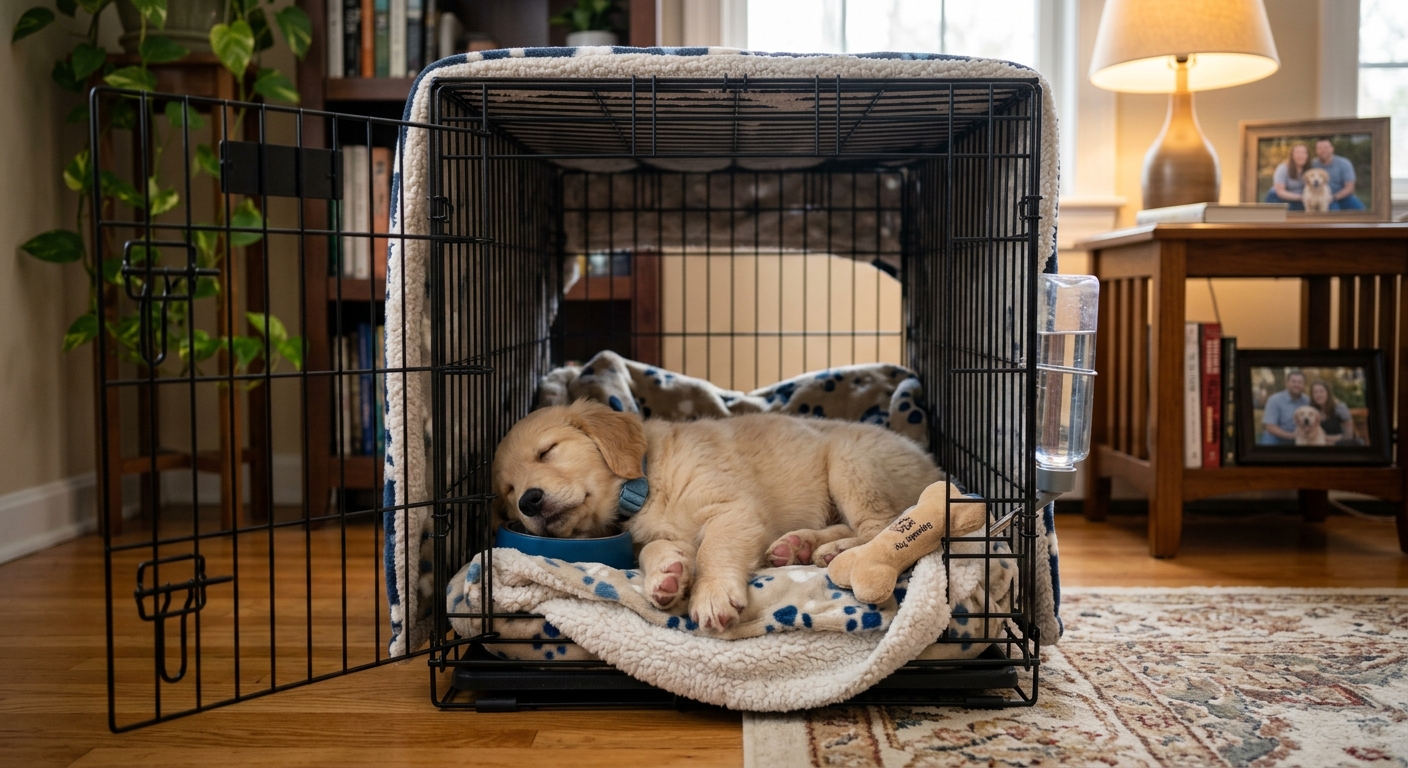
- Cozy & Inviting: Line the crate with a soft bed or blanket. Add safe, enriching chew toys (like a Kong stuffed with peanut butter or a puzzle toy) to make it an appealing spot.
- Positive Associations:
- Toss treats inside and let your dog retrieve them without closing the door.
- Feed your dog their meals exclusively inside the crate.
- Play fun impulse control games around and inside the crate, always keeping it positive and voluntary.
- Start with short durations during the day, gradually increasing the time. Never force them in.
The Nighttime Routine: Your Step-by-Step Guide to Quiet Crating
Step 1: The "Wind-Down" Hour – Mental & Physical Preparation
A well-exercised and mentally stimulated dog is a tired dog, and a tired dog sleeps better. However, it's crucial to distinguish between active playtime and calm winding down. Avoid intense play right before bed. Instead, focus on activities that "tire out the brain."
- Physical Activity: Ensure your dog gets adequate physical exercise during the day. A good walk, a game of fetch, or some vigorous play will help burn off excess energy.
- Mental Stimulation: Engage their minds with a short training session (we recommend you incorporate a "Go To" routine), puzzle toys, or scent games. This can be more tiring than physical exercise.
- Calm Before the Crate: About an hour before bedtime, transition to calm activities. Cuddles on the couch, gentle petting, or quiet chew time. Understanding and managing puppy energy cycles is key here to avoid an overtired, hyper dog.
Step 2: The Critical Last Potty Break
This is non-negotiable! Take your dog out for their absolute last potty break just minutes before going into the crate for the night. Make it boring – no play, just business. Praise quietly for success. Be prepared for potty breaks, even when it’s raining! Ensure they empty their bladder and bowels as much as possible.
Step 3: Calm & Confident Crate Entry
Approaching the crate at bedtime should be a calm, positive experience, not a wrestling match.
- Lure with Value: Toss a high-value treat (like a small piece of cheese or cooked chicken) into the crate. As your dog goes in to get it, calmly say your "Crate" or "Bed" command.
- A Special Bedtime Treat: Provide a long-lasting, safe chew toy or a stuffed Kong only given at bedtime in the crate. This creates a positive association and keeps them occupied as you leave.
- No Pushing or Forcing: If your dog is hesitant, go back to daytime positive reinforcement exercises. Forcing them will create negative associations and make nighttime much harder.
Step 4: Creating the Sleep Zone
Once your dog is calmly in their crate with their special chew, it's time to set the environment for sleep.
- Cover the Crate: Many dogs find a covered crate comforting, as it mimics a den. Use a light blanket or a specifically designed crate cover. Ensure good ventilation.
- White Noise/Calm Music: A white noise machine or soft, calming classical music can help mask household sounds and provide a consistent auditory environment for sleep.
- Proximity (Initially): For puppies or dogs new to crating, placing the crate in your bedroom can provide reassurance. Your presence and breathing can be a great comfort. Gradually, you can move the crate to your desired long-term location if you wish.
- Say Goodnight Calmly: A simple, quiet "Goodnight, I love you" and then walk away. Don't make a big production out of leaving, as this can heighten anxiety.
Step 5: Handling Nighttime Whines & Wakes
This is often where the "screaming" comes in, and it's crucial to respond correctly.
- Distinguish Potty Needs vs. Attention Seeking:
- Potty Need: A sudden, insistent bark or whine after a period of quiet, especially from a young puppy, usually means they need to go out. Check the clock – how long has it been since their last break?
- Attention Seeking: Whining or barking that escalates when you approach, or starts shortly after you put them in, might be your dog testing boundaries.
- Potty Break Protocol: If you suspect a potty need, take them out immediately. No talking, no playing, just carry them out, let them relieve themselves, offer quiet praise, and immediately put them back in the crate. Do not allow them to play or wander.
- Ignoring Attention Seeking: This is tough, but critical. If you've addressed all potential needs (potty, hunger, thirst, discomfort), and your dog is still whining for attention, you must ignore it. Any attention – scolding, soothing, or letting them out – will reinforce the crying behavior. It will likely get worse before it gets better (extinction burst), but consistency pays off.
- Safety First: Of course, if you hear distressed yelping, constant frantic scratching, or anything that sounds like genuine distress or injury, investigate immediately.
Troubleshooting & Encouragement
- "My Dog Still Cries!" Re-evaluate your daytime positive association. Are they getting enough mental and physical stimulation? Is the crate truly a happy place? Consistency is paramount.
- Age-Appropriate Times: Remember that puppies cannot hold their bladder as long as adult dogs. Adjust your expectations and nighttime potty breaks accordingly.
- Patience is a Virtue: Crate training, especially at night, takes time and consistency. There will be good nights and challenging nights. Don't give up!
- Seek Expert Help: If you're struggling, remember that professional guidance can make all the difference. Many of our clients have experienced incredible real success stories transforming their dog's behavior with positive methods.
Embrace Peaceful Nights with PetTrain360
Crate training doesn't have to be a source of stress and sleepless nights. By embracing positive reinforcement, creating a comfortable den, and following a consistent nighttime routine, you can teach your dog to love their crate and enjoy peaceful, uninterrupted sleep. At PetTrain360, we're dedicated to helping you build a stronger, happier bond with your dog through humane and effective training methods.
Ready for more insights into creating a well-behaved companion? Explore our extensive library of articles and courses, designed to empower you with the knowledge and techniques for every training challenge!