
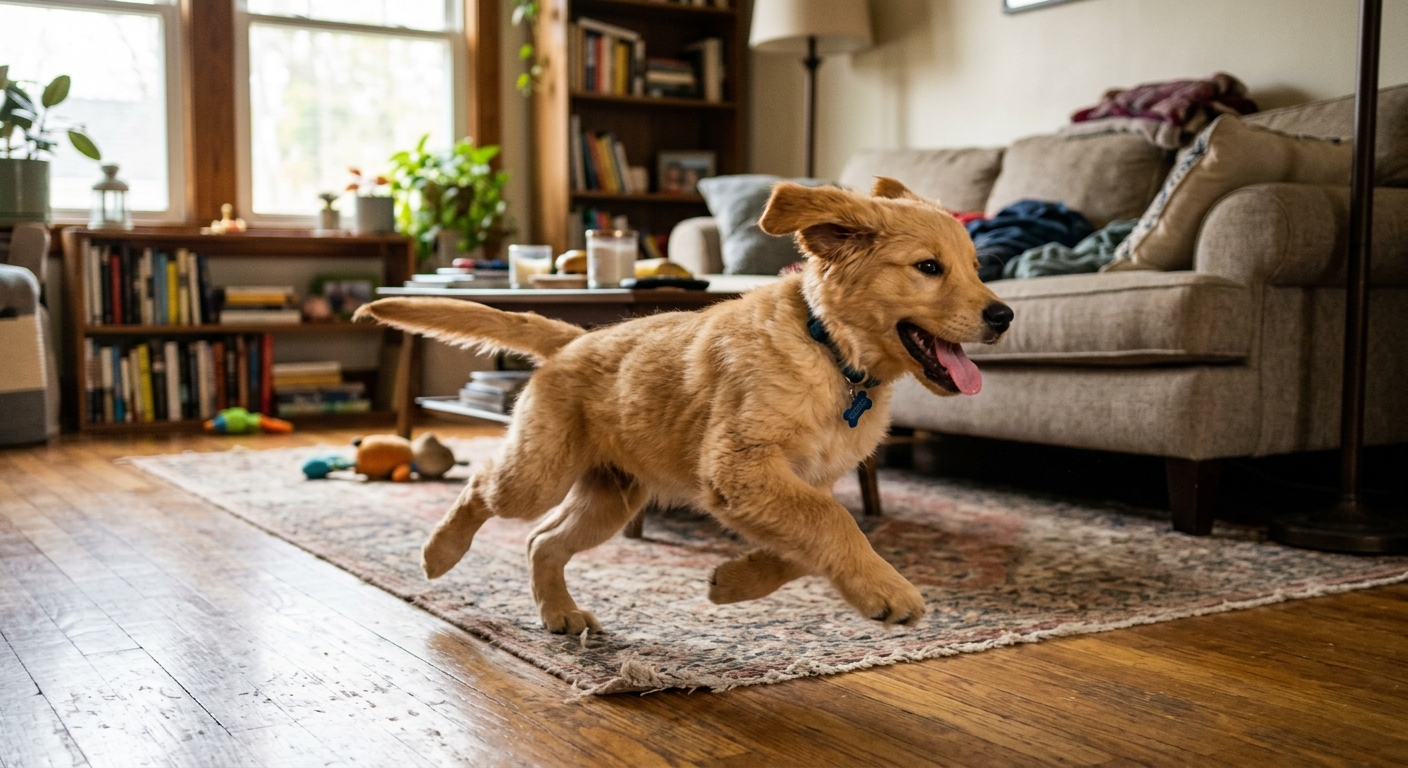
Ah, puppies! Adorable bundles of fluff, boundless enthusiasm, and sometimes... bewildering bursts of energy. As a new puppy parent, you've probably witnessed moments when your little furball transforms into a furry missile, tearing through the house, sliding on rugs, and seemingly defying the laws of physics. These are often affectionately known as "the zoomies," or FRAPs (Frenetic Random Activity Periods).
But how do you tell if your puppy is having a joyful, healthy release of pent-up energy, or if these wild antics are actually a cry for help – a sign of being utterly over-overtired? Understanding the difference is crucial for your puppy's well-being and for establishing a balanced, positive routine. At PetTrain360, we're here to guide you through these energetic cycles with positive reinforcement and expert insights.
What Are "The Zoomies"?
The zoomies are typically short, explosive bursts of energy that dogs (and especially puppies) display to release excess excitement or pent-up energy. Think of it as a puppy's way of blowing off steam! They often happen:
- After a bath (the "relief" zoomies!).
- In the evening after a period of rest or confinement.
- Following a successful training session or exciting playtime.
- When greeting a favorite person.
Signs of happy zoomies:
- Pup has a joyful, open-mouthed expression.
- Tail is often wagging happily.
- Body language is loose and bouncy.
- They might invite you to play or briefly engage with a toy during their run.
- The episode is relatively short (a few minutes) and ends with the puppy settling down or flopping for a nap.
Zoomies are a perfectly normal and healthy part of puppyhood. The key is to manage them by ensuring your puppy has a safe space to express this energy and isn't allowed to cause damage or get hurt. You might even use this energy to practice a strong emergency recall if they're zooming in an open, safe area!
Recognizing Over-Overtiredness
This is where things can get tricky. An overtired puppy can sometimes mimic the frantic energy of the zoomies, but with a different underlying cause and a less joyful demeanor. Puppies need a lot of sleep – often 18-20 hours a day! Pushing them past their limits can lead to undesirable behaviors.
Signs of an over-overtired puppy:
- Increased Nipping and Biting: A tired puppy is often a mouthy puppy, similar to a tired toddler becoming cranky.
- Uncharacteristic Grumpiness: Snapping, growling, or being easily startled by normal stimuli.
- Hyperactivity that Lacks Joy: Running around frantically, but with a stiff body, wide eyes, and an almost frantic or desperate energy, rather than playful.
- Difficulty Settling: They seem unable to relax, even when playtime has ended.
- Poor Focus: Unable to concentrate on simple commands, even ones they know well.
- Ignoring Cues: They might disregard your attempts to calm them or redirect their behavior.
If you see these signs, it's not a playful burst; it's a desperate need for sleep and downtime. Just like setting up your home before their arrival is crucial for success, providing a calm retreat is paramount. If you're still in the preparation phase, check out our guide on how to set up your house before bringing a puppy home.
Why the Confusion?
The main reason these two states are often confused is the visible "hyperactivity." Both can involve running, jumping, and a generally energetic display. However, the key difference lies in the puppy's underlying emotional state and body language. Zoomies are joyful; overtiredness is agitated and distressed.
Managing Puppy Energy: Strategies for a Happy, Well-Rested Pup
A proactive approach using positive reinforcement is the best way to manage your puppy's energy cycles.
1. Implement a Structured Routine (Sleep, Play, Train)
Puppies thrive on predictability. A consistent schedule helps them understand when it's time for activity and, more importantly, when it's time to rest. Aim for short bursts of activity followed by enforced naps.
- Scheduled Naps: Ensure your puppy gets enough undisturbed sleep in a quiet, comfortable crate or pen.
- Potty Breaks: Regular puppy potty training success is easier with a good schedule.
- Play Sessions: Engage in structured playtime, but know when to stop before over-stimulation.
Consider structuring short training sessions, like our "Go To" Routine, to provide mental stimulation that tires them out effectively.
2. Prioritize Brain Games & Mental Stimulation
Physical exercise is important, but mental exercise is often far more tiring for a puppy. Engaging their minds can prevent boredom and reduce the likelihood of frenetic energy bursts born of frustration.
- Puzzle Toys: Food-dispensing toys are fantastic for engaging their problem-solving skills.
- Training Sessions: Short, positive training sessions work wonders. Teach new commands or refine existing ones. Games like impulse control games or even platform training can be incredibly beneficial.
- Scent Work & Hide and Seek: These activities tap into their natural instincts and are hugely rewarding.
3. Create a Calm and Safe Space
Every puppy needs a designated "safe zone" where they can retreat, feel secure, and nap undisturbed. This could be a crate, a playpen, or a specific dog bed in a quiet corner. Make sure this space is positive and inviting.
4. Reward Calmness
Actively reward your puppy when they choose to be calm. When you see them lying down quietly, settle, or chew a toy calmly, offer a gentle praise or a small, delicious treat. This reinforces that calm behavior is desirable.
When to Intervene (and How)
- For Zoomies: If they're zooming safely, let them enjoy it! If they're getting too wild, gently redirect them to a safer area or toss a favorite toy to burn off that last bit of energy. Avoid chasing, as this can escalate the excitement.
- For Overtiredness: The best intervention is often a forced nap. Gently lead your puppy to their crate or quiet space. Provide a chew toy if it helps them settle, but don't engage in further play. Dim the lights, reduce noise, and let them rest. Remember, an overtired puppy isn't "bad"; they're just overstimulated and need help winding down.
Embrace the Journey with PetTrain360
Understanding your puppy's energy cycles is a cornerstone of building a strong, positive relationship. By learning to distinguish between happy zoomies and overtired antics, you can better meet their needs, foster healthy development, and ensure a harmonious home. For more expert guidance, a comprehensive curriculum, and real success stories, explore PetTrain360’s on-demand library and see how our methods achieve amazing results. Happy training!