
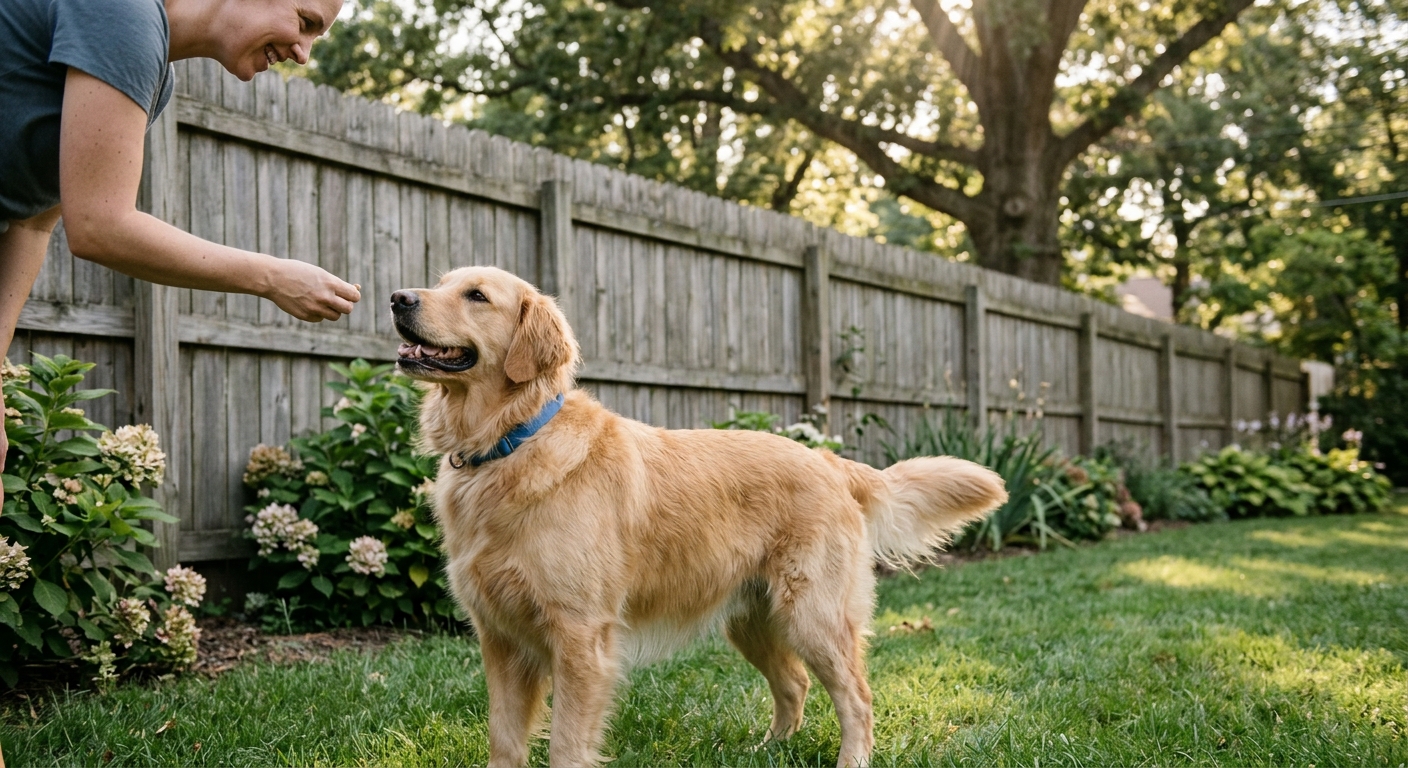
An online puppy training course teaches you, step by step, how to build your puppy's core skills at home: potty training, crate comfort, name response, sit, down, loose-leash walking, gentle mouthing, and calm socialization. PetTrain360 courses use positive reinforcement with short video lessons you can follow on your own schedule, so your puppy learns in the place they actually live.
Bringing home a puppy is exciting, and a little overwhelming. Between potty accidents, sharp teeth, and night-time crying, it is easy to wonder where to start. A structured online puppy training course gives you a clear plan, so you are not piecing together advice from a dozen videos. Here is what a good course covers and how to get the most out of PetTrain360.
Why start training early
Puppies learn quickly. The early weeks at home are when habits form, good or bad. A puppy who learns that sitting earns attention will sit more; a puppy who learns that jumping gets a reaction will jump more. Starting a course right away means you are shaping habits on purpose instead of fixing them later.
Early training is also about confidence. Gentle, positive exposure to new sounds, surfaces, people, and handling helps many puppies grow into relaxed adult dogs. Our fear-free puppy socialization checklist lists experiences to plan for in the first months.
Why an online course works well for puppies
Group classes have their place, but online training offers real advantages for young puppies:
- Learning where it matters. Your puppy learns potty habits, crate time, and manners in your actual home.
- Short sessions on your schedule. Puppies learn best in a few minutes at a time. Online lessons fit around naps, meals, and work.
- Rewatch anytime. If a step did not click, replay the lesson instead of trying to remember what the trainer said last week.
- Whole-family consistency. Everyone in the house can watch the same lessons and use the same cues.
What a PetTrain360 puppy course covers
Week-by-week foundations
A clear progression keeps you from trying to teach everything at once. Our puppy training schedule by week shows how skills build on each other from 8 to 16 weeks.
Potty training
You learn how to set a schedule, read your puppy's signals, reward outdoor success, and clean accidents without punishment. Many families find a focused approach like our 3-day potty training method gives them a strong start.
Crate comfort and sleep
Lessons show you how to make the crate a safe, cozy place and how to handle night-time whining calmly. For the overnight piece, see our crate training night-time guide.
Core cues
- Name response and focus: your puppy looks at you when called
- Sit and down: the building blocks of calm behavior
- Come: an early, fun recall game
- Leave it: a safety skill for things puppies should not eat
- Settle: relaxing on a mat or bed
Mouthing and biting
Puppies explore with their mouths. You learn to redirect to toys, teach gentle mouths, and recognize when your puppy is overtired rather than "naughty."
Leash skills
Short indoor sessions introduce the harness and leash, then build toward loose-leash walking outside.
Handling and grooming prep
Gentle practice touching paws, ears, and mouth makes vet visits and grooming easier later.
The positive reinforcement approach
PetTrain360 uses reward-based training. You mark and reward the behavior you want, so your puppy chooses it more often. This approach builds trust and makes training something your puppy looks forward to. It also avoids harsh corrections that can create fear, especially in young or sensitive puppies.
Rewards do not have to be food forever. Courses show you how to use play, praise, and life rewards, like going outside or greeting a friend, and how to fade treats over time.
How to get the most from an online course
- Train in tiny sessions. Two to five minutes, a few times a day, beats one long session.
- Set up for success. Start in a quiet room before adding distractions.
- Use the same words. Agree on cues as a family, and write them on the fridge.
- Reward fast. Puppies connect rewards to what happened in the last second or two.
- End on a win. Finish every session with something your puppy can do easily.
- Track progress. A quick note after each session shows how far you have come and where to focus.
Common puppy problems a course helps with
- Accidents in the house after a few good days
- Crying in the crate at night
- Nipping hands, feet, and clothing
- Jumping on guests
- Pulling on the leash
- Chewing furniture or shoes
- Zoomies and overexcitement in the evening
Each has a clear, kind solution, and a structured course walks you through it rather than leaving you to guess.
A sample first week with PetTrain360
Here is how a realistic first week can look for a busy household. On day one, you set up the crate, a potty spot, and a feeding schedule, and you play a name game a few times. On days two and three, you add short crate sessions with the door open, reward every outdoor potty, and start "sit" before meals. By midweek, you introduce the harness indoors, practice handling paws during calm moments, and swap hands for a chew toy whenever those puppy teeth come out. By the weekend, many puppies are offering a quick sit for attention and settling in the crate for short naps.
Every puppy moves at their own pace, and that is fine. The goal of the first week is not perfection. It is a calm routine, a few early wins, and a puppy who is learning that paying attention to you pays off.
When to add extra help
Most puppy behavior is normal and improves with consistent training. If your puppy shows intense fear, growls or snaps while guarding food or toys, or does not seem to be improving, talk with your veterinarian to rule out health issues, and consider extra one-on-one guidance.
Frequently asked questions
What age should my puppy start a training course?
You can start as soon as your puppy comes home, often around 8 weeks. Early lessons focus on potty habits, crate comfort, name response, and gentle socialization.
Can a puppy really learn from online training?
Yes. In an online course, you learn the method and then teach your puppy at home, which is where most puppy habits form. Short, consistent practice is what makes it work.
How long should puppy training sessions be?
Keep sessions short, about two to five minutes, a few times a day. Puppies have short attention spans and learn best in small, successful bursts.
Do I need special equipment?
A flat collar or harness, a leash, a crate or safe area, small soft treats, and a few chew toys cover most lessons.
Is positive reinforcement enough for a stubborn puppy?
For most puppies, yes. "Stubborn" usually means the reward is not valuable enough or the task is too hard right now. Adjusting rewards and difficulty often solves it.
Start your puppy's training today
The habits you build in the first weeks can shape years of life together. A clear plan makes it easier, calmer, and more fun for both of you. Join PetTrain360 and start your online puppy training course today.