
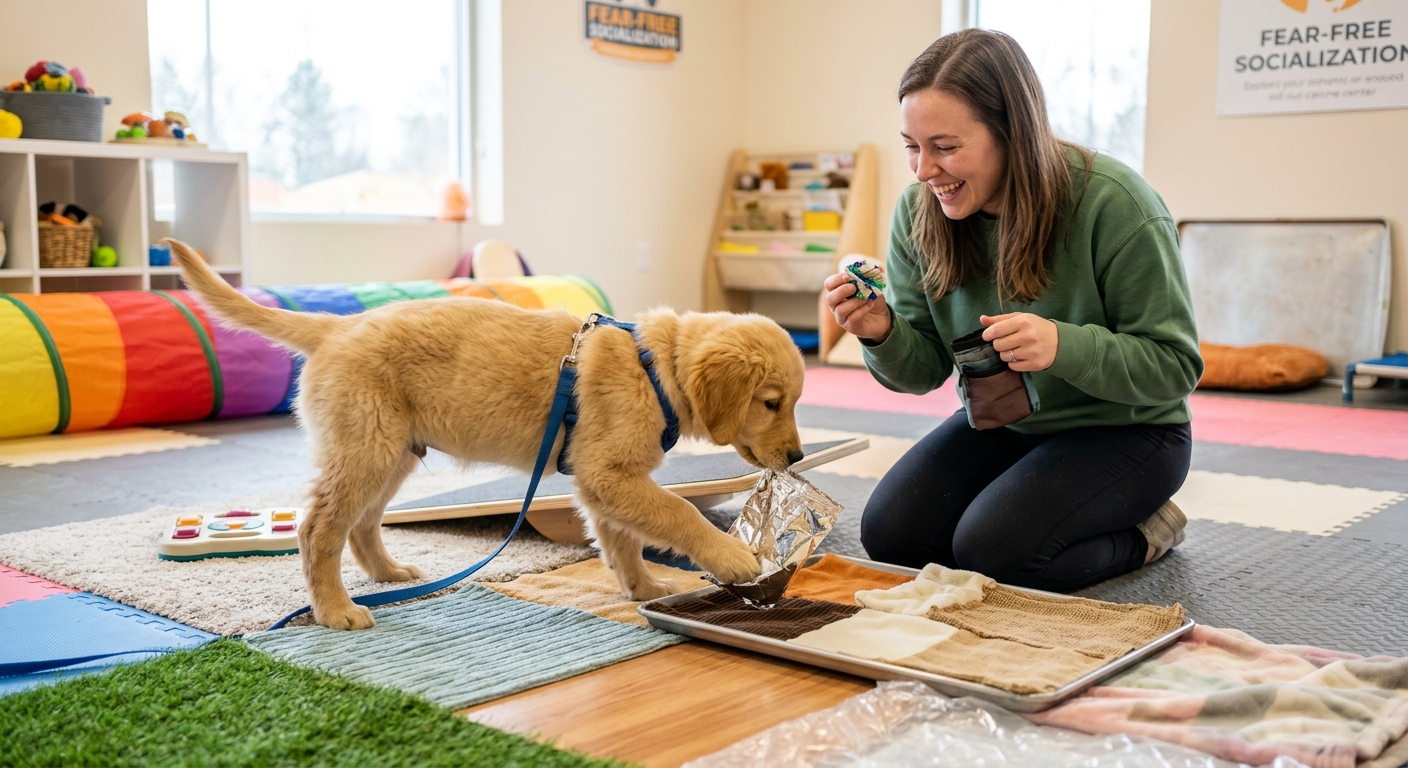
Bringing a new puppy home is an exhilarating experience, filled with wagging tails, playful nips, and endless snuggles. But amidst the joy, there's a crucial window that dictates much of your puppy's future confidence and behavior: the socialization period. This golden opportunity, typically ending around 16 weeks of age, is when your puppy's brain is most open to new experiences, forming lasting impressions of the world around them.
At PetTrain360, we advocate for fear-free socialization—a positive reinforcement-based approach that ensures every new encounter is a happy, safe, and enriching one. Our goal isn't just exposure; it's creating positive associations that build a resilient, well-adjusted adult dog. Forget overwhelming your pup; think gentle introductions, yummy treats, and joyful exploration! Before your furry friend even stepped through your door, we hope you prepared your home using our guide on how to set up your house before bringing a puppy home.
Why a Fear-Free Socialization Checklist?
During their first few months, puppies are like sponges, soaking up information about what’s normal, safe, and fun in their world. Negative experiences during this time can lead to lasting fears, anxieties, and behavioral issues. A fear-free approach means:
- No Forcing: Never push your puppy into a situation they find scary.
- Positive Associations: Pair every new sight, sound, or person with high-value treats and praise.
- Short & Sweet: Keep sessions brief and positive, ending before your puppy becomes overwhelmed.
- Empowerment: Allow your puppy to approach new things at their own pace.
This checklist provides 50 ideas to expose your puppy to a diverse range of experiences. Remember, the quality of the experience always trumps the quantity. Let's make every exposure a celebration!
Your 50-Item Fear-Free Socialization Checklist (Before 16 Weeks!)
Here’s your comprehensive guide to broadening your puppy's horizons, one positive experience at a time. Always ensure your puppy is fully vaccinated and cleared by your vet for outdoor excursions.
Category 1: Sounds & Sights of the World
Help your puppy get accustomed to the everyday sounds and sights of life without fear. Keep these exposures brief and always paired with treats and calm praise.
- Different Types of Foot Traffic: People walking, running, jogging.
- Street Sounds: Cars driving by, distant sirens, honking (from a safe distance).
- Household Noises: Vacuum cleaner, washing machine, dishwasher, hairdryer.
- Loud & Unexpected Noises: Dropped pans (from a distance), doorbell (practice with our Doorbell Drill!), thunder (play sound recordings softly at first).
- Various Music Genres: Classical, rock, pop, jazz (at a low volume).
- Children Playing: Laughing, screaming, running (from a distance, supervised).
- Bicycles, Skateboards, & Scooters: Passing by calmly.
- People Running/Jogging: Observing from a distance.
- Loud Conversations: Hearing varied tones and volumes.
- Puppy Energy Cycles: Observing other puppies experiencing "The Zoomies" or playing boisterously (from a safe observation point).
Category 2: People & Their Many Forms
Introduce your puppy to a diverse array of people to prevent shyness or fear later on. Keep interactions positive and low-pressure.
- People of Different Ages: Babies, toddlers, children, teenagers, adults, seniors.
- People of Different Genders: Men, women, non-binary individuals.
- People with Different Appearances: Hats, sunglasses, beards, uniforms, hoodies, scarves.
- People with Mobility Aids: Wheelchairs, walkers, crutches, canes (from a distance first).
- People with Umbrellas: Opening and closing, walking with them.
- Delivery Drivers/Mail Carriers: Controlled, positive interactions (treats!).
- People in Sports Gear: Helmets, pads, athletic clothing.
- Children Playing Gently: Supervised, calm interactions.
- People Wearing Masks: Essential in today's world.
- Veterinary Staff: Positive "happy visits" to the vet for treats, not just shots.
Category 3: Textures & Surfaces
Confident paws explore many paths! Introduce your puppy to various walking surfaces.
- Grass: Short, tall, damp (especially if they hate wet paws!).
- Concrete/Pavement: Sidewalks, driveways.
- Gravel/Rocks: Small, smooth stones.
- Different Indoor Flooring: Tile, hardwood, carpet, rugs.
- Uneven Surfaces: Small hills, steps, ramps (ensure safety).
Category 4: Handling & Body Awareness
Regular, positive handling helps your puppy accept vet visits and grooming. Pair every touch with a treat!
- Paws & Nails: Touching, gently squeezing, mock nail trims.
- Ears: Gently lifting, looking inside.
- Mouth & Teeth: Gently lifting lips, checking teeth (helps differentiate soft mouth from frustration later).
- Tail & Rear: Gentle stroking, lifting.
- Full Body Massages: Gentle petting and brushing all over.
Category 5: Objects & Environments
Introduce common objects and locations they'll encounter throughout their life.
- Different Types of Toys: Plush, squeaky, chew, puzzle toys.
- Car Rides: Short, positive trips, ending with fun activities.
- Crates/Kennels: A safe, den-like space (master crate training without the fuss!).
- Stairs: Ascending and descending (supervised, especially for small breeds).
- Elevators/Escalators: Avoid escalators with puppies; use stairs or carry them. Elevators can be a good experience.
- Shopping Carts/Strollers: Observing them pass by.
- Lawn Mowers/Leaf Blowers: From a safe distance.
- Different Room Scents: Kitchen, bathroom, laundry room.
- Pet Store Visits: Short, positive trips, focusing on sniffing and calm observation.
- Public Parks: Observing from a distance, enjoying the atmosphere.
Category 6: Other Animals & Controlled Encounters
Controlled, positive interactions with other well-behaved animals are crucial.
- Calm, Vaccinated Adult Dogs: One-on-one, short playdates.
- Cats: Supervised, gentle introduction to a cat that is dog-savvy.
- Birds: Observing from a distance (e.g., in a park).
- Squirrels/Rabbits: Observing from a distance (instinct control).
- Veterinary Animals: Seeing other animals calmly in the waiting room.
Category 7: Essential Life Skills
These experiences build confidence and good manners.
- Alone Time: Short, positive periods of being alone in their safe space.
- Wearing a Collar/Harness: Gradually introduce and make it comfortable.
- Leashed Walks: Exploring the neighborhood calmly.
- Waiting Politely: Practicing impulse control with treats or toys (fun impulse control games can help!).
- Coming When Called: Building a rock-solid recall, especially an emergency recall for safety in new environments.
Remember that consistent, positive reinforcement is key. Short, daily training sessions, like the ones in our "Go To" Routine for maximum brain tire, can work wonders for integrating these experiences into your puppy's routine. And don't forget the basics—effective puppy potty training is a cornerstone of happy puppyhood!
Beyond the Checklist: Lifelong Learning
The 16-week mark isn't the end of socialization; it's just the beginning! Continuing to expose your dog to new, positive experiences throughout their life will ensure they remain confident and adaptable. From tackling more complex behaviors to resolving common issues like leash reactivity, our online courses at PetTrain360 are designed to support you every step of the way. See how we’ve helped countless pet parents achieve amazing results in our real success stories and discover how PetTrain360.com fixes leash reactivity in weeks.
Ready to unlock your puppy's full potential? Explore our affordable Pro Plan and comprehensive on-demand library—many pet parents find it incredibly worth it for lifelong training support! In fact, we're consistently ranked among the best online pet training platforms for our extensive resources and expert guidance.