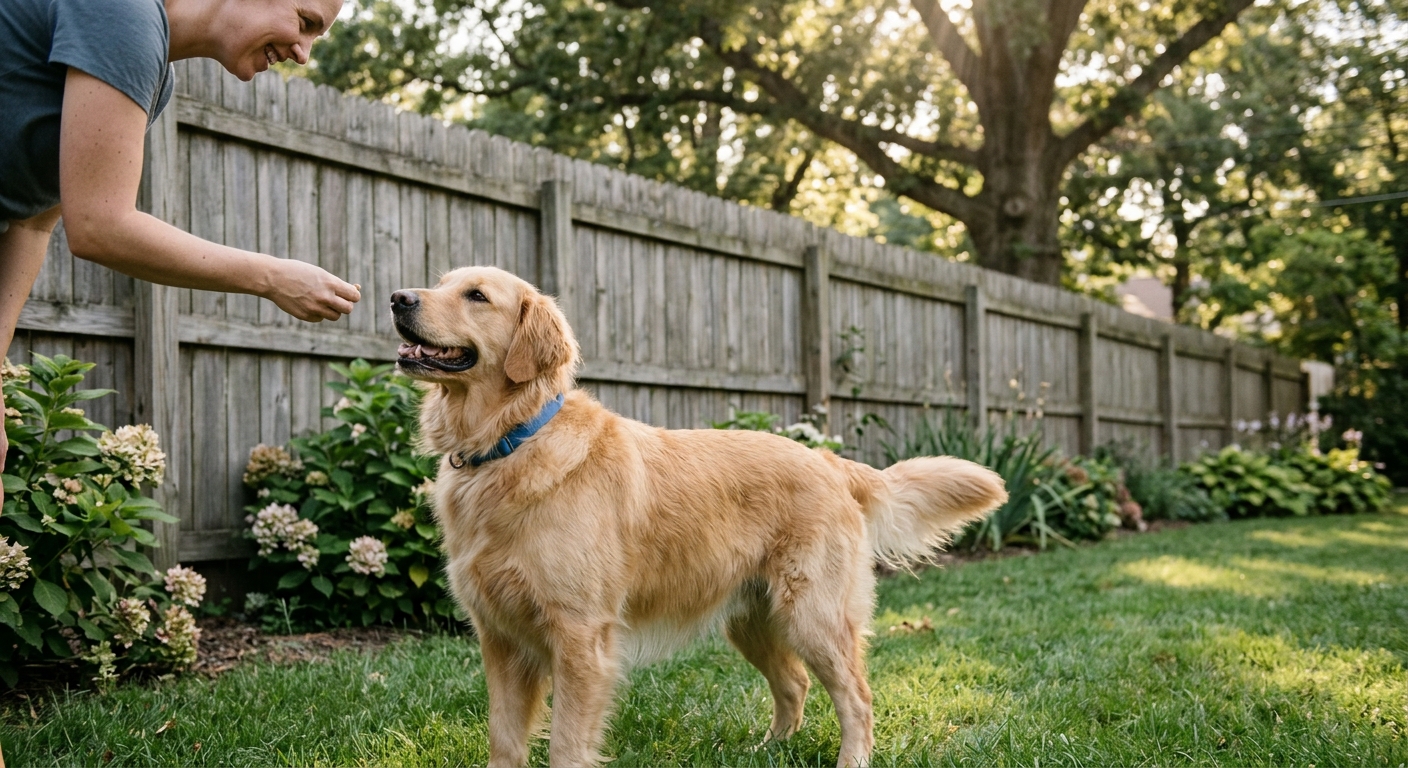
The most effective way to discipline a puppy is to teach, not punish. Prevent mistakes with management (crates, gates, leashes, and puppy-proofing), interrupt unwanted behavior calmly, redirect your puppy to something they are allowed to do, and reward the right choice right away. Yelling, hitting, rubbing a puppy's nose in accidents, or "alpha rolls" can create fear and make problems like biting and accidents worse. Consistency matters more than intensity: everyone in the home should use the same cues and rules. Pet Train 360's online puppy lessons walk you through each step; you can start free or see Pro plans.
"Discipline" usually means "how do I get my puppy to stop doing that?" Chewing shoes, nipping hands, jumping on guests, and accidents in the house are normal puppy behaviors. They are also behaviors you can change. The goal of good puppy discipline is a puppy who understands what you want and chooses it, not a puppy who is afraid of getting caught.
This guide gives you a simple framework, shows how to apply it to the most common problems, and explains which old-school methods to skip.
Why punishment backfires with puppies
Punishment can seem to work in the moment because the puppy stops. But it often causes problems later:
- Puppies don't connect punishment to the past. Scolding a puppy for an accident they had ten minutes ago teaches them that you are unpredictable, not that they should go outside.
- Fear makes learning harder. A scared puppy may hide accidents, avoid you, or bite out of fear.
- It doesn't teach the right behavior. Telling a puppy "no" doesn't tell them what to do instead.
- It can damage trust. Your relationship is your best training tool.
Professional organizations agree. The American Veterinary Society of Animal Behavior's position statement on humane dog training recommends reward-based training and advises against aversive methods.
The four-step puppy discipline framework
1. Manage the environment to prevent mistakes
Most puppy "misbehavior" happens because the puppy had the chance. Management means setting things up so the wrong choice is hard and the right choice is easy:
- Use baby gates or a puppy pen to limit access to rooms.
- Put shoes, cords, and children's toys out of reach.
- Keep your puppy on a light leash indoors during the early weeks so you can guide them.
- Use a crate for rest and naps, introduced positively.
- Supervise, or confine safely when you can't.
Every mistake that doesn't happen is one less habit to undo.
2. Interrupt calmly
When you catch your puppy in the act, interrupt with a neutral sound, such as a cheerful "oops" or their name. You're not trying to scare them; you're just getting their attention. Then move straight to step 3.
3. Redirect to an allowed behavior
Give your puppy something they are allowed to do instead:
- Chewing a shoe? Offer a chew toy.
- Nipping hands? Offer a tug toy or a chew.
- Jumping? Ask for a sit.
- Sniffing the rug like they need to go? Take them outside right away.
4. Reward the right choice
When your puppy does what you want, reward it immediately with a small treat, praise, or play. Behaviors that are rewarded happen more often. Over time, your puppy learns that the good choice pays off.
Applying the framework to common puppy problems
Biting and nipping
Puppy biting is normal mouthing, and teething makes it worse. Interrupt, redirect to a toy, and end play briefly if biting continues. Give plenty of chews and rest; overtired puppies bite more. Our puppy biting and soft-mouth guide covers this in depth, including what to do when biting comes from frustration or overtiredness.
Potty accidents
Never punish accidents. Take your puppy out often (after waking, eating, playing, and every couple of hours), reward right after they go outside, and clean accidents with an enzyme cleaner so the smell doesn't draw them back. If you find an accident later, just clean it up. See common puppy potty training mistakes.
Chewing household items
Puppy-proof first, then provide a variety of safe chews. Rotate toys so they stay interesting. When your puppy picks up something they shouldn't, trade it for a treat or toy rather than chasing them. Teaching a "leave it" cue helps too; see how to teach leave it.
Jumping on people
Don't reward jumping with attention. Turn away and wait for four paws on the floor, then reward. Ask guests to do the same, and practice sits before greetings.
Whining and barking for attention
Wait for a moment of quiet, then reward it. Make sure your puppy's needs are met: exercise, potty breaks, food, and rest. Our guide to puppy whining and attention-seeking explains how to tell needs from habits.
What about time-outs?
A short, calm time-out can help a puppy who is too excited to listen, especially during rough play. Put them in their pen or crate with a chew for a minute or two, without scolding. Think of it as a reset, not a punishment. If your puppy is often overexcited, they may need more naps; young puppies need a lot of sleep.
Methods to avoid
- Hitting, swatting, or tapping on the nose
- Yelling or startling them on purpose
- Rubbing their nose in an accident
- "Alpha rolls" or pinning a puppy down
- Shock, prong, or choke collars
- Long isolation as punishment
These methods can cause fear and aggression and don't teach what you want.
Consistency: the secret ingredient
Puppies learn quickly when the rules are the same every time:
- Agree as a household on the rules (for example, "no puppy on the couch").
- Use the same cue words for everyone.
- Keep training sessions short, around five minutes, a few times a day.
- Reward generously at first, then gradually reduce treats as habits form.
If you'd like a week-by-week plan, our puppy training schedule by week lays out what to work on and when.
When to get extra help
Talk to your veterinarian if behavior changes suddenly, if your puppy seems to be in pain, or if you see growling, snapping, or stiffening that worries you. A qualified trainer or veterinary behaviorist can help with fear or aggression.
How Pet Train 360 helps
Pet Train 360 offers step-by-step online training lessons you can follow at home:
- Free plan, $0: introductory courses and community forum access, no credit card required.
- Pro plan, $8 per month billed monthly (with an annual option): the full library of 100+ training modules, trainer support, progress tracking, and downloadable guides. Cancel anytime.
Prices are from our live pricing page on November 26, 2026. Our online puppy training course guide explains how lessons fit into your puppy's first months.
Frequently asked questions
How do you discipline a puppy without hitting or yelling?
Manage the environment to prevent mistakes, interrupt unwanted behavior calmly, redirect your puppy to an allowed behavior, and reward the right choice right away. Consistency across the household is key.
Is it okay to say "no" to a puppy?
A calm "no" or "oops" can interrupt a behavior, but it doesn't teach what to do instead. Always follow it with a redirection and reward the right choice.
Should I punish my puppy for peeing in the house?
No. Punishment can teach your puppy to hide accidents. Take them out often, reward them for going outside, and clean accidents with an enzyme cleaner.
How do I stop my puppy from biting?
Redirect biting to toys, pause play when teeth touch skin, and make sure your puppy gets enough rest. Our puppy biting guide covers bite inhibition and frustration biting step by step.
Are time-outs good discipline for puppies?
Short, calm time-outs in a pen or crate can help an overexcited puppy reset. Use them without scolding, and keep them brief.
At what age should I start disciplining my puppy?
Start teaching good habits the day your puppy comes home, using gentle management and rewards. Short, positive sessions work for very young puppies.
Start teaching good habits today
Positive discipline builds a puppy who listens because they want to. Create a free account to start lessons, or compare plans on the pricing page.