
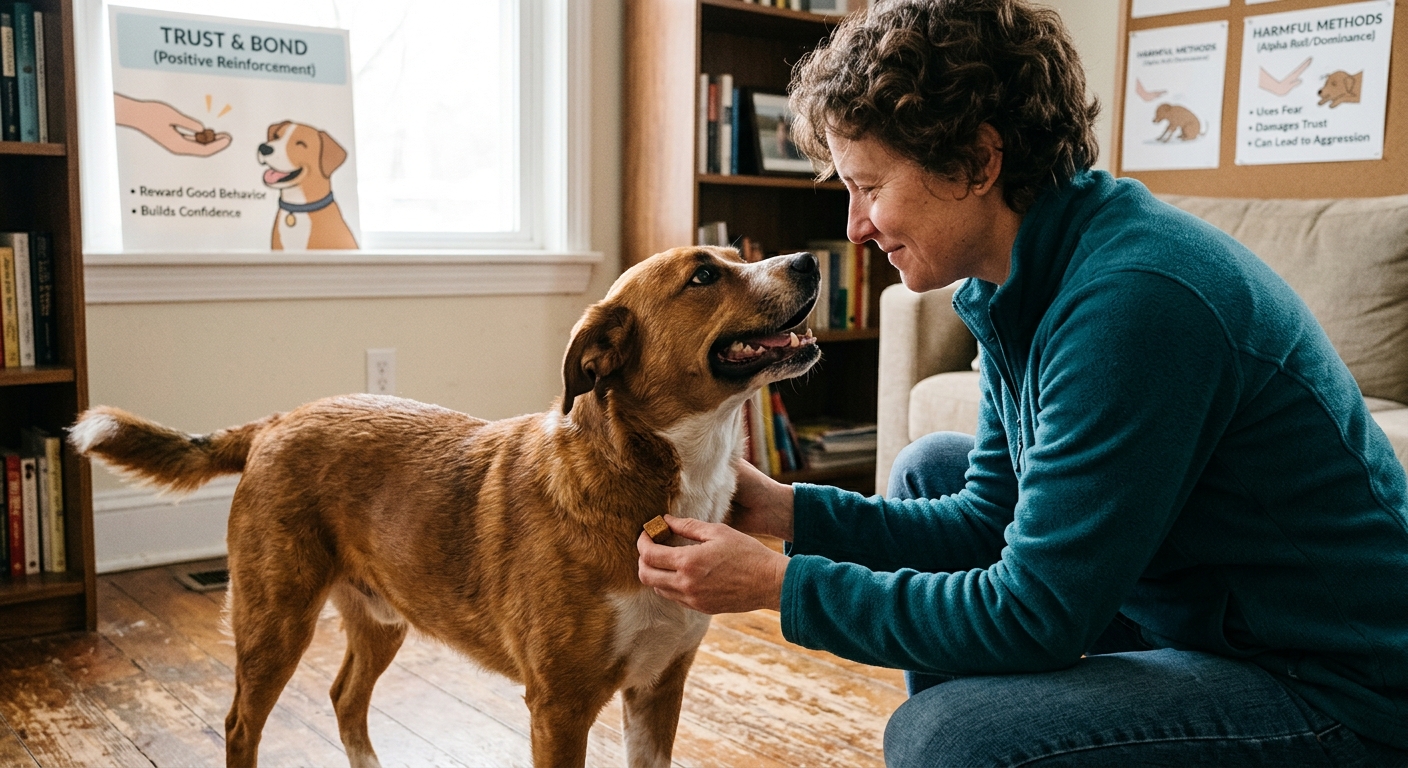
Why "Alpha Roll" Training Is Ruining Your Dog’s Trust
At PetTrain360, our philosophy is rooted in building strong, positive relationships between dogs and their humans. We believe that effective training comes from understanding, patience, and mutual respect, not fear or intimidation. That's why today, we're tackling a controversial and outdated training method that can severely damage the precious bond you share with your canine companion: the "alpha roll."
What is the "Alpha Roll" (And Why It's Misguided)?
The "alpha roll" is a coercive training technique where a human forcibly rolls a dog onto its back and holds it in a vulnerable, submissive position. Proponents of this method often believe they are asserting dominance, mimicking what they perceive as canine pack behavior to establish themselves as the "alpha leader."
However, modern canine science has thoroughly debunked the outdated "dominance theory." Dogs don't operate on a rigid, linear hierarchy in their natural social structures, and the idea of humans needing to be an "alpha" over their pet is a profound misunderstanding of dog behavior. When dogs exhibit what might appear to be dominance, it's often a complex interplay of resource guarding, fear, insecurity, or a lack of clear communication, not an attempt to overthrow their human leader.
The Harmful Impact on Your Dog's Trust
Imagine if every time you made a mistake or showed discomfort, you were physically forced into a vulnerable position. Would you learn? Or would you become fearful, resentful, and untrusting? Your dog feels the same way. The "alpha roll" does far more harm than good:
1. It Shatters Trust and Creates Fear
- Erodes Security: Your dog looks to you for safety and guidance. When you use physical force, especially an "alpha roll," you become a source of fear rather than comfort. This fundamentally breaks their trust in you as a benevolent leader.
- Increased Anxiety: Dogs subjected to such harsh methods often become anxious, stressed, and may even develop learned helplessness, shutting down rather than engaging in natural behaviors.
2. It Can Lead to Aggression
- Defensive Reactions: When a dog is forcibly put into a vulnerable position, their natural instinct is to defend themselves. An "alpha roll" can provoke a bite from even the most docile dog, purely out of fear and self-preservation. What some perceive as a "bad" dog is often a frustrated greeter vs. fear aggressive reaction, and an alpha roll only exacerbates fear.
- Suppression, Not Solution: The alpha roll might suppress a behavior in the short term, but it doesn't address the underlying cause. It teaches your dog to fear you, not to understand what you want. The suppressed behavior often resurfaces later, potentially with more intensity, as the dog learns to mask its discomfort or react more severely.
3. It Damages Your Relationship
A strong relationship with your dog is built on a foundation of positive experiences, clear communication, and mutual respect. The "alpha roll" replaces these pillars with fear and coercion, turning your relationship into a power struggle rather than a loving partnership. Your dog will learn to avoid you or become withdrawn, instead of eagerly engaging with you.
Why Positive Reinforcement is the Way Forward
At PetTrain360, we advocate for modern, science-based positive reinforcement training methods. These methods focus on rewarding desired behaviors, making learning a fun and rewarding experience for both you and your dog. This approach:
- Builds a Stronger Bond: Positive reinforcement strengthens trust and respect, fostering a happy, confident dog who *wants* to work with you.
- Teaches What to Do: Instead of punishing what you don't want, you actively teach your dog what *to do* in various situations. This creates clear communication and understanding.
- Addresses Root Causes: Positive trainers seek to understand *why* a dog is behaving a certain way (e.g., fear, boredom, lack of exercise) and then address that root cause, leading to lasting behavioral change.
Effective, Trust-Building Alternatives
Instead of resorting to outdated dominance methods, here are positive-reinforcement based alternatives for common challenges:
- For Reactivity or Lunging: Instead of physically correcting your dog for barking or lunging on walks, try counter-conditioning techniques like The "Look at That" Game to change their emotional response to triggers.
- For Leash Pulling: Forget yanking and corrections. Start with leash training indoors with the zero-distraction method, rewarding slack-leash walking. Also, ensure your dog is comfortable with their gear by teaching your puppy to love the harness from day one.
- For Puppy Biting/Nipping: Understand the difference between normal play nipping and aggression. Learn how to redirect and manage this natural puppy behavior by reading our guide on puppy biting or aggression.
- For Resource Guarding or General Boundaries: Instead of forcing compliance, teach invaluable commands like "Leave It" through positive reinforcement, giving your dog a choice and rewarding the correct one.
- For Over-Excitement or Pushy Behavior: Teach your dog polite manners using rewards. For example, reward your dog for sitting politely when greeting, rather than jumping.
Build a Partnership, Not a Dictatorship
Your dog deserves a relationship built on love, respect, and clear communication. Embracing positive reinforcement methods will not only solve behavioral challenges more effectively but will also deepen the incredible bond you share. Ditch the "alpha roll" and outdated dominance theories. Choose trust, choose kindness, choose PetTrain360's approach for a happier, healthier relationship with your best friend.
Explore more positive training resources and guides on PetTrain360.com today!