
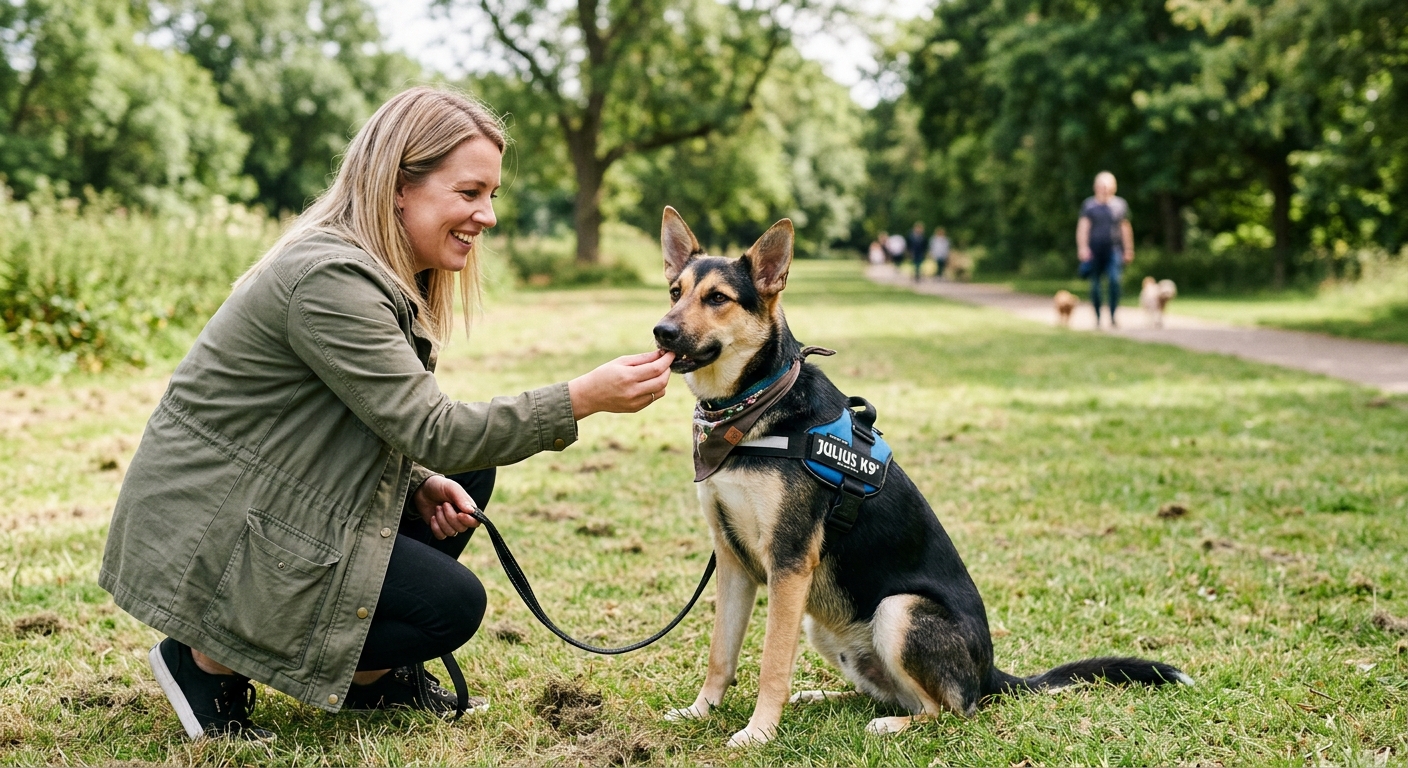
Does your dog transform into a barking, lunging, or fearful mess when they spot another dog, a person, or even a skateboarder on your walks? You're not alone. Living with a reactive dog can be stressful, frustrating, and even isolating. But what if there was a way to help your dog feel calmer, safer, and even *happy* when encountering their triggers?
Enter The "Look at That" Game (LAT) – a powerful, positive-reinforcement technique designed to change your dog's emotional response to things that make them react. At PetTrain360, we believe in empowering both ends of the leash, and LAT is one of our favorite tools for doing just that.
What is Dog Reactivity, Anyway?
Before diving into the game, let's understand reactivity. A reactive dog isn't necessarily "bad" or "dominant." More often, their reactions (barking, lunging, growling, freezing, pulling intensely) stem from underlying emotions like fear, frustration, or over-excitement. For a deeper dive into understanding these behaviors, check out our article on why your dog lunges on leash.
Our goal with LAT is not to "punish" the reaction away, but to change the association in your dog's brain from negative (or over-aroused) to positive. This is called counter-conditioning.
How The "Look at That" Game Works (The Science!)
The "Look at That" game is a simple yet incredibly effective form of classical conditioning. We're pairing something your dog finds scary or exciting (the trigger) with something wonderful (high-value treats!). Over time, the sight of the trigger becomes a predictor of delicious rewards, changing your dog's emotional response from "OH NO!" to "OH BOY!"
The Core Principle: See Trigger → Get Treat
The magic happens when your dog notices their trigger, and instead of reacting, they look at it, then look back at you, anticipating a treat. You're teaching them that the trigger isn't something to fear or get upset about, but rather a signal that good things are about to happen.
Getting Started: Your LAT Game Prep Kit
- High-Value Treats: This is CRUCIAL. Think tiny pieces of cooked chicken, cheese, hot dogs, or PetTrain360's recommended soft training treats. These treats need to be irresistible – something your dog rarely gets and absolutely loves.
- A Leash and Harness: Ensure your dog is comfortable in their walking gear. If you're still working on it, our guide on teaching your puppy to love the harness can help.
- A Calm Environment: Start in a place where triggers are far away and infrequent. This might be your backyard, a quiet park during off-peak hours, or even just inside your house if your dog reacts to things outside the window.
- Patience and Positivity: This is a journey, not a sprint. Celebrate small wins!
Playing The "Look at That" Game: Step-by-Step
Step 1: Identify Your Dog's Threshold
This is the distance at which your dog *notices* the trigger but doesn't *react* negatively. They might look, perk their ears, but they're not barking, lunging, or freezing in fear. If they react, you're too close – move further away!
Step 2: The "Look at That" Sequence
- Dog sees trigger: The moment your dog spots another dog, person, or object they usually react to.
- You Mark & Treat: The instant your dog looks at the trigger (but before they react), quietly say "Yes!" or use a clicker, then immediately give them a high-value treat.
- Repeat: Continue this sequence. Dog sees trigger, you mark/click, treat.
The goal is that your dog eventually looks at the trigger, then *voluntarily* looks back at you, anticipating the treat. That's when you know the association is starting to form!
Step 3: Gradually Decrease Distance (Slowly!)
Once your dog is consistently looking at the trigger and then at you for a treat at your starting distance, you can very, very slowly begin to decrease the distance. A few feet at a time! If your dog starts reacting, you've moved too quickly – increase the distance again.
Step 4: Practice, Practice, Practice
Consistency is key. Short, positive sessions (5-10 minutes) several times a day are more effective than one long, stressful session. Remember, we're building a new emotional response.
Before taking these skills to busy outdoor environments, ensure your dog has a solid foundation in leash training indoors. This will make your outdoor sessions much more manageable.
Troubleshooting Common LAT Game Hurdles
- My Dog Isn't Taking Treats: If your dog refuses treats, they are likely over threshold. Move further away from the trigger until they can comfortably take treats.
- My Dog Keeps Reacting: Again, you're too close! Increase your distance. It's better to be too far away and have a successful session than too close and reinforce reactive behavior.
- I Missed the Moment: Don't worry! If you miss the "look," just ignore the reaction and calmly move your dog away from the trigger. Reset and try again.
- My Dog Just Stares at the Trigger: This can indicate they're very focused or slightly over threshold. Try a more exciting treat or a different marker. Sometimes a gentle leash turn to change their angle can help redirect their focus.
- My Dog is Still a Puppy and Reacts: Early intervention is fantastic! Ensure your puppy is getting fear-free socialization from a young age to prevent reactivity from developing or worsening.
Beyond LAT: Holistic Support for Your Reactive Dog
While the "Look at That" game is incredibly effective, it's just one piece of the puzzle. Supporting a reactive dog also involves:
- Management: Avoiding situations where your dog is guaranteed to react. This means crossing the street, changing your walking route, or turning around when a trigger appears too close.
- Mental Enrichment: Reactive dogs often have a lot of pent-up energy and stress. Incorporating brain games and mental enrichment can significantly help reduce overall stress levels.
- Basic Obedience & Impulse Control: Commands like "Sit," "Stay," and especially "Leave It" are invaluable for managing your dog's focus and preventing engagement with triggers.
- Stress Reduction: Ensure your dog has a calm, predictable home environment. This could include effective crate training, consistent routines, and adequate rest.
When to Seek Professional Help
If your dog's reactivity is severe, involves aggression, or you feel overwhelmed, please don't hesitate to contact a certified professional dog trainer or veterinary behaviorist. They can provide personalized guidance and support tailored to your dog's specific needs.
Embrace the Journey to Calm Walks!
The "Look at That" game is a powerful, humane, and positive way to help your reactive dog. It takes patience, consistency, and a whole lot of delicious treats, but the reward of seeing your dog relaxed and happy on walks is truly priceless. Start small, celebrate every tiny success, and enjoy the process of building a stronger, calmer bond with your best friend.
Happy training!