
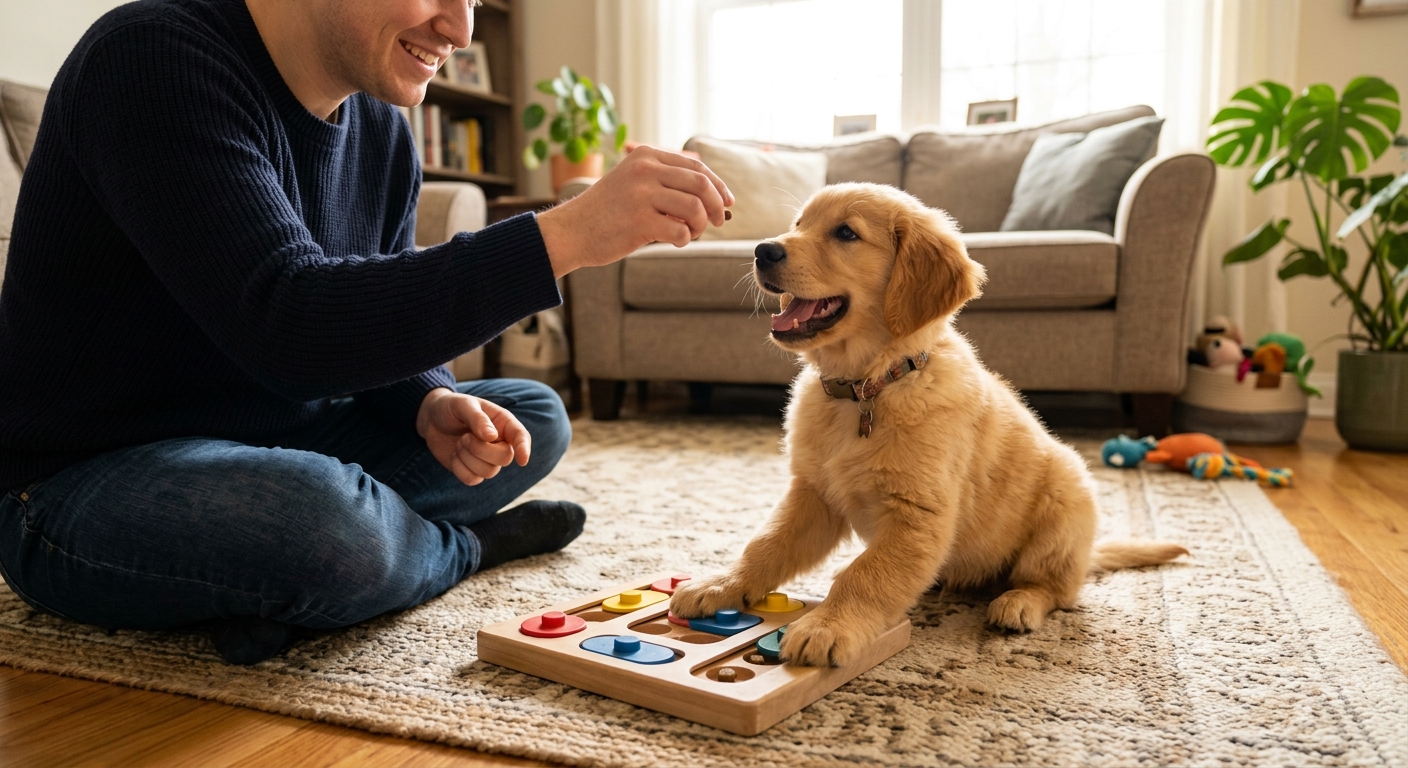
Enrichment for Puppies: 7 Brain Games That Tire Them Out Faster Than Walks
Those adorable little bundles of fluff come with an endless supply of energy, don't they? While physical exercise is crucial for a puppy's development, it's often not enough to truly satisfy their busy minds. In fact, too much physical exertion can even be detrimental to growing joints. The secret to a calm, happy, and well-adjusted puppy? Mental enrichment!
Just like humans, puppies need their brains challenged. Mental exercise can be far more tiring than a long walk, helping to prevent boredom, reduce destructive behaviors, and build confidence. It's also a fantastic way to strengthen your bond through positive reinforcement. Understanding your puppy's energy cycles helps you choose the right activities at the right time.
Ready to engage your pup's brilliant mind? Here are 7 fantastic brain games that will leave your puppy happily exhausted and ready for a nap!
1. Scent Work: The "Find It!" Game
Puppies have incredible noses, and putting them to work is wonderfully enriching. This game taps into their natural instincts and builds confidence!
- How to Play: Start simple. Let your puppy see you place a high-value treat (or a favorite toy) on the floor a few feet away. Say "Find It!" and encourage them to get it. As they understand, gradually increase the difficulty: hide the treat under a towel, behind a chair, or in another room while they watch. Eventually, you can have them stay in a different room (or use a "wait" command) while you hide the treat.
- Why it Works: Engages their most powerful sense, builds problem-solving skills, and provides a rewarding mental workout. If your puppy tends to grab things too quickly, you might find how to teach "Leave It" incredibly useful for this game!
2. The Muffin Tin Challenge
A simple kitchen item can become a fantastic puzzle toy!
- How to Play: Place a small treat in a few cups of a muffin tin. Cover each cup with a tennis ball (or another sturdy toy your puppy can't easily swallow). Encourage your puppy to use their nose and paws to dislodge the balls and get the treats.
- Why it Works: This game requires dexterity and problem-solving, making them think about how to get to the reward.
3. Gentle Tug & Drop
Tug-of-war is a fantastic game, but it's even better when it teaches impulse control and appropriate play.
- How to Play: Use a sturdy, puppy-safe tug toy. Engage your puppy in a gentle game of tug. After a few seconds, stop moving the toy and say "Drop It!" When your puppy lets go, immediately reward them with a treat and praise, then re-engage in tug. The key is to make "Drop It!" rewarding, so they learn releasing the toy makes the fun continue!
- Why it Works: Teaches crucial manners and self-control. For more insights on building self-control with their favorite items, check out our guide to impulse control games. This also helps with understanding the difference between playful mouthing and true frustration.
4. The Shell Game (Puppy Edition)
A classic magic trick, simplified for your furry friend!
- How to Play: Place three opaque cups (plastic or paper) upside down on the floor. Let your puppy watch you place a treat under one cup. Shuffle the cups slowly and visibly. Encourage your puppy to nose or paw at the cup they think the treat is under. Lift the cup. If they chose correctly, they get the treat! If not, try again.
- Why it Works: Boosts observation skills, memory, and encourages focused attention. This kind of focus can even aid in developing stronger responses for commands like an emergency recall.
5. DIY Obstacle Course
Turn your living room into an adventure playground!
- How to Play: Use household items to create a safe, low-level obstacle course. Crawl under chairs, weave around pillows, step over blankets, or balance across a low board. Guide your puppy through with treats and praise, making it a fun exploration.
- Why it Works: Develops body awareness, coordination, and confidence in navigating different textures and spaces. It's a wonderful way to introduce them to novelty in a safe, controlled environment, much like setting them up for success by preparing your puppy for handling during vet visits and grooming.
6. Interactive Puzzle Toys & Lick Mats
Sometimes, you need an activity that keeps your puppy engaged independently.
- How to Play: Invest in a variety of puzzle toys designed to dispense kibble or treats as your puppy manipulates them. Lick mats, smeared with peanut butter, yogurt, or wet food, are also excellent for calming and sustained engagement.
- Why it Works: These toys provide sustained mental stimulation, encourage independent problem-solving, and can be incredibly soothing. They're perfect for quiet time or even helping your puppy settle in their crate. For a delicious and calming treat, try freezing some of their favorite safe chews, much like the recommendations in our teething survival kit.
7. Teach a New Trick!
Learning new behaviors is one of the best ways to tire out a puppy's brain and strengthen your communication.
- How to Play: Choose a simple trick like "Paw," "Spin," or "Touch" (nose-targeting your hand). Break it down into tiny steps, using treats and praise to reward every correct movement. Keep sessions short (5-10 minutes) and positive.
- Why it Works: Boosts cognitive skills, improves focus, builds communication between you and your puppy, and helps them understand how to learn. Incorporating short, focused sessions into a daily training routine can maximize brain tire and accelerate learning. This also contributes to their overall confidence, which is vital for fear-free socialization.
Unleash Their Potential (and Enjoy the Quiet!)
Incorporating these brain games into your puppy's routine will not only mentally exhaust them more effectively than endless walks but also build their confidence, reduce problem behaviors, and deepen your incredible bond. Remember to keep sessions fun, short, and always end on a positive note!
Happy training, and get ready for a well-deserved puppy nap!