
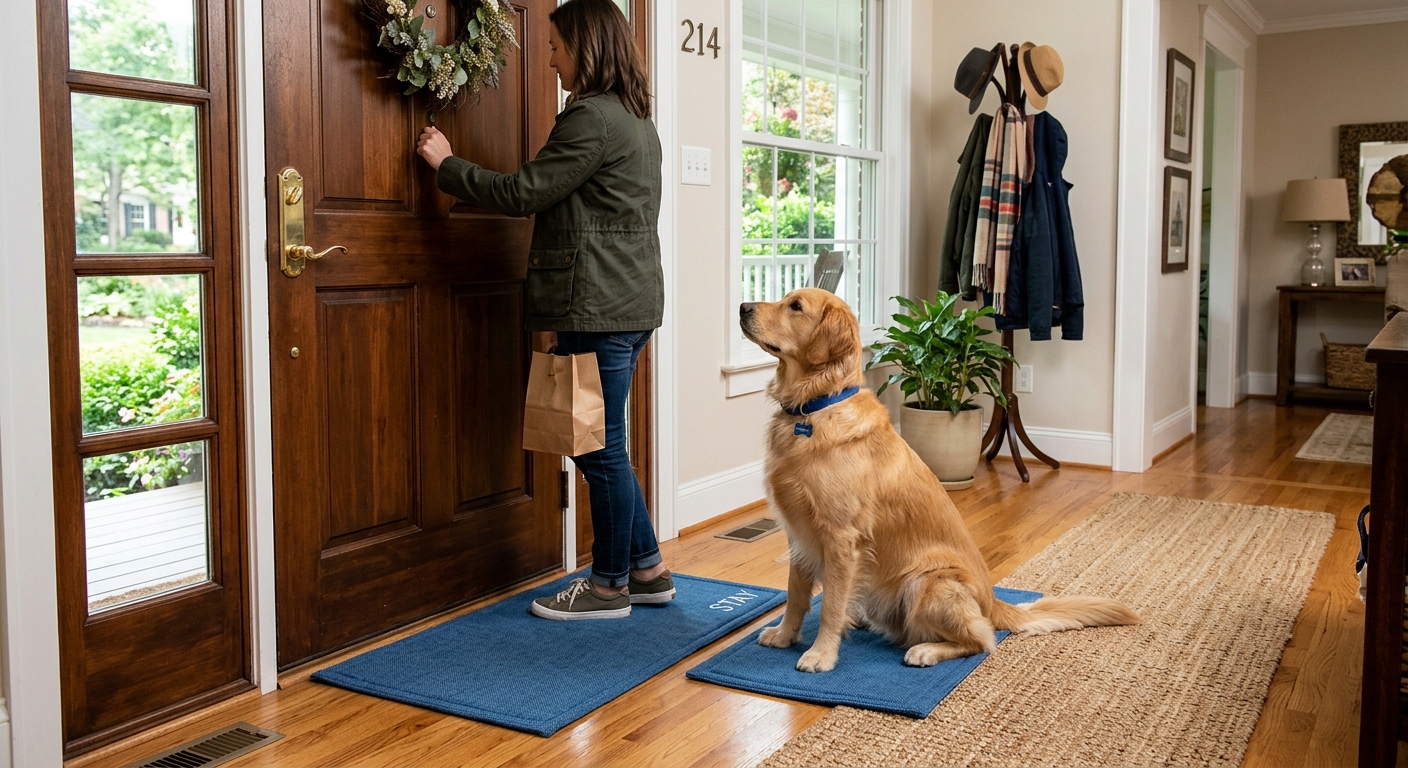
Does the sound of your doorbell send your otherwise angelic canine into a frenzy? Do you brace yourself for a cacophony of barks, jumps, and general chaos every time someone dares to knock? You're not alone! Many dog owners experience the dreaded "doorbell meltdown," but the good news is, you don't have to live with it. At PetTrain360, we believe in empowering you with effective, positive-reinforcement techniques to transform this stressful situation into a calm, controlled routine. Get ready to teach your dog the ultimate polite greeting: going to their mat when guests arrive!
Understanding the Doorbell Dilemma
For many dogs, the doorbell or a knock isn't just a sound; it's a trigger. It signals excitement, perceived threat, or an opportunity to "alert" their human. This often manifests as excessive barking, jumping, and even lunging on leash, demonstrating either a frustrated greeter or fear-based reaction. Traditional methods of scolding or punishing this behavior rarely work and can even damage your dog's trust, reinforcing why we always advocate for positive training, steering clear of outdated, harmful techniques like those described in Why "Alpha Roll" Training Is Ruining Your Dog’s Trust.
Instead, we want to teach your dog an incompatible, polite behavior. If they're happily settling on their mat, they can't be barking maniacally at the door! This strategy is about giving them a job and a safe, comfortable place to be during a potentially high-stress event.
Why a "Mat Stay" is Your Secret Weapon
- Clarity: Your dog knows exactly what's expected of them.
- Control: You manage the greeting, ensuring safety for both your dog and guests.
- Calm: The mat becomes a safe, rewarding space, helping your dog associate the doorbell with peace, not panic.
- Consistency: Once learned, this behavior can be applied anywhere you bring their mat.
Getting Started: The Foundation of Mat Training
Success starts with building a strong foundation for the "go to your mat" command in a low-distraction environment. Think of it like leash training starting indoors – master the basics before adding challenges.
Step 1: Introduce the Mat (No Distractions!)
- Choose a Mat: Any towel, rug, or designated dog bed works. Make it distinct.
- Lure & Reward: With your dog on leash (initially, to prevent wandering), place the mat on the floor. Lure your dog onto the mat with a high-value treat. As soon as their paws hit the mat, say "YES!" or click, and reward them generously.
- Repeat: Toss a treat off the mat, let them retrieve it, then lure them back on. Repeat 10-15 times per short session.
- Add a Cue: Once they're reliably stepping on, start saying "Mat" (or "Place," "Bed") just as they step on.
Step 2: Build Duration
Once your dog understands "Mat," gradually increase the time they spend on it.
- Start Small: Ask for "Mat." When they lie down, reward immediately.
- Slowly Delay: Next time, wait one second before rewarding. Then two, then three. Build up to 10-15 seconds.
- "Release" Cue: Always use a clear release word like "Okay!" or "Free!" to tell them they can get off the mat.
- Randomize: Don't always reward at the same interval. Keep them guessing to maintain engagement.
Step 3: Add Distance
Practice having your dog go to their mat from varying distances.
- Short Steps: Start by taking one step away from the mat, ask for "Mat," and reward when they're settled.
- Increase Distance: Gradually increase the distance until you can ask them to go to their mat from across the room.
- Body Language: Pay attention to their body language. If they're hesitant, you've gone too far too fast.
Introducing the Doorbell & Knock: Phased Desensitization
This is where we bring it all together. Remember, we're not just asking them to go to their mat; we're changing their emotional response to the doorbell. This requires careful counter-conditioning and desensitization, much like teaching your reactive dog to focus on you instead of their triggers.
Step 4: The Practice Knock/Doorbell
- Start Soft: Have a helper (or use a recording) give a very soft, barely audible knock or doorbell sound.
- "Mat" & Reward: IMMEDIATELY after the sound, say "Mat!" and guide your dog to their mat. Reward heavily for settling.
- Gradual Increase: Over many sessions, slowly increase the volume and intensity of the knock/doorbell.
- Reward the Calm: The goal isn't just to get them on the mat, but for them to be calm on the mat while the sound occurs.
Step 5: Adding a Human to the Mix
Once your dog is consistently going to their mat and staying calm with just the sound, it's time to add a person.
- Helper at the Door: Have your helper approach the door, knock softly, and then immediately move away.
- "Mat" & Reward: Ask your dog to their mat and reward for calm behavior.
- Brief Greetings: Gradually, have the helper knock, you send your dog to their mat, open the door briefly, and then close it. Keep it short and sweet.
- Guest Entry: Once your dog is comfortable, have your helper enter. Keep your dog on their mat, rewarding them for staying. You can have the guest toss a treat to your dog on the mat as a positive association, but only once your dog is reliably staying.
Troubleshooting & Pro Tips
- High-Value Treats are Key: This is a high-distraction scenario; use your dog's absolute favorite treats!
- Practice Daily: Short, frequent sessions (5-10 minutes) are more effective than one long, infrequent session.
- Manage Expectations: This isn't a quick fix. Be patient and consistent. Set your dog up for success.
- Don't Rush: If your dog is struggling, go back a step. Building confidence is crucial.
- Pre-Emptive Management: If you know someone is coming over and you're still in training, use a baby gate or leash your dog near their mat to prevent them from practicing unwanted behaviors.
- General Reactivity: If your dog exhibits general reactivity beyond the doorbell, such as during walks, consider exploring resources on how to walk a reactive dog in a dense urban neighborhood to address the root causes more broadly.
- Mental Stimulation: A tired dog is a good dog! Ensure your dog is getting enough mental enrichment throughout the day. Check out our ideas for enrichment for puppies – these games are great for adult dogs too!
Ring Out the Old, Ring In the New!
Transforming doorbell meltdowns into calm greetings is incredibly rewarding for both you and your dog. By consistently applying these positive-reinforcement mat training techniques, you'll provide your dog with clarity, confidence, and a comfortable place to be when visitors arrive. Say goodbye to chaos and hello to harmonious homecomings!