
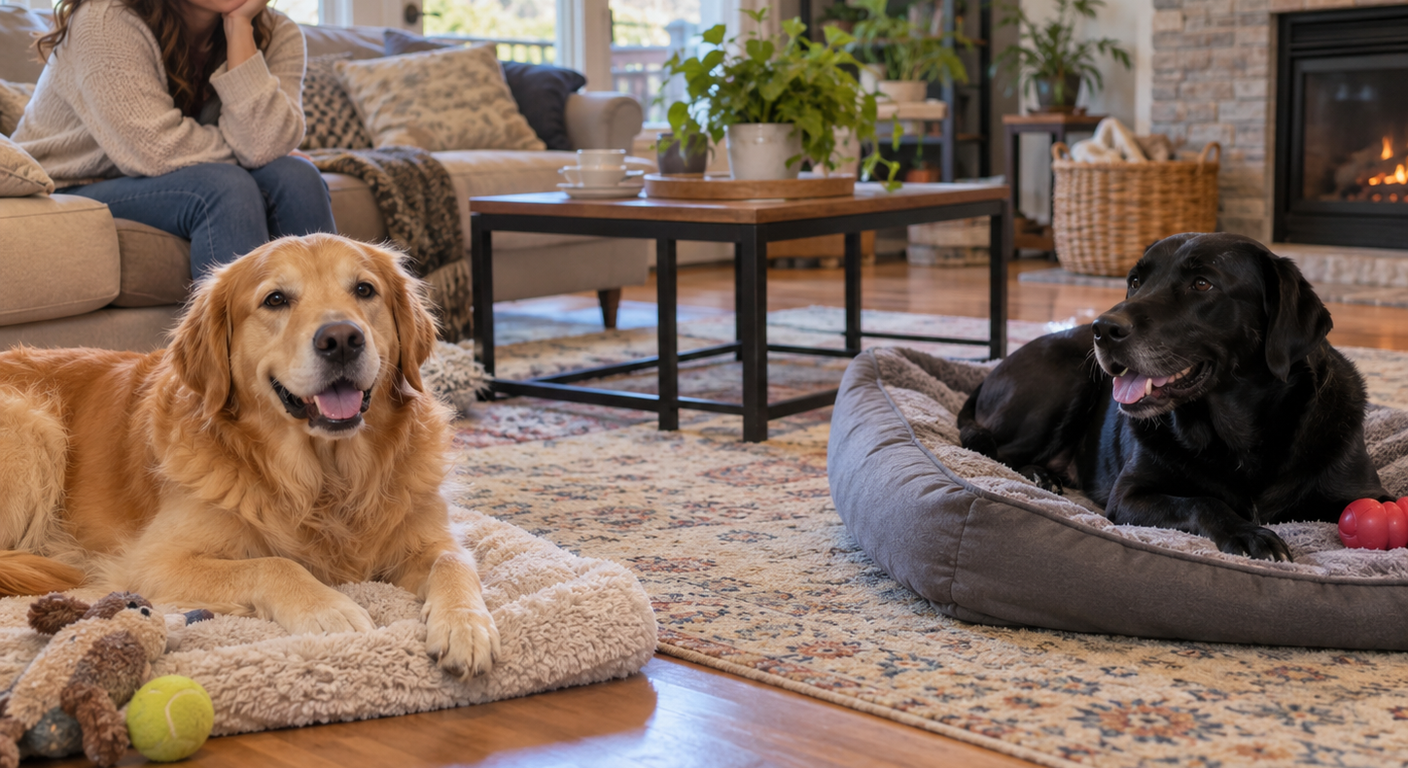
Living with multiple dogs is a joy, a symphony of wagging tails, playful antics, and endless cuddles. However, even the happiest multi-dog households can encounter challenges. One common hurdle? Resource guarding between dogs.
Resource guarding, sometimes mistakenly called "possessive aggression," is a natural canine behavior where a dog protects items they value (food, toys, resting spots, even their human!) from others. While natural, when it leads to tension or conflict between your beloved companions, it’s crucial to step in with positive, proactive management and training strategies. At PetTrain360, we believe in building trust and fostering a harmonious environment for all your furry family members. Let's explore how to manage and mitigate resource guarding effectively.
Understanding Resource Guarding: It's Not About Dominance
Forget outdated, fear-based methods like "alpha roll" training. Resource guarding is rooted in a dog's instinct to secure valuable resources for survival, not an attempt to dominate. It's often triggered by perceived scarcity or past experiences. A dog might growl, stiffen, stare, or even snap if another dog (or human) approaches a valued item. Understanding this helps us approach the problem with empathy and positive solutions.
Common Triggers for Resource Guarding
- Food: Bowls during meal times, high-value chews, dropped treats.
- Toys: Favorite squeaky toys, chew toys, puzzle feeders.
- Spaces: Beds, crates, couches, a specific spot next to you.
- Attention/Humans: Wanting exclusive access to a person, especially if one dog feels neglected.
Immediate Management Strategies for Safety and Harmony
The first step in addressing resource guarding is to prevent incidents from happening. Management means structuring the environment so guarding isn't necessary or possible. This is vital for the safety and stress levels of all dogs in your home.
1. Separate Feeding Stations
This is non-negotiable for dogs with food guarding tendencies. Feed dogs in separate rooms, crates, or at least far enough apart that they cannot see or reach each other's bowls. Remove all bowls once meals are finished.
2. Supervise High-Value Items Extensively (or Remove Them)
High-value chews, long-lasting bones, or special puzzle toys should ideally only be given when dogs are completely separated. If you allow them when dogs are together, ensure 100% direct supervision. As soon as there's any tension, calmly remove the item and separate the dogs.
3. Create "Safe Zones" for Each Dog
Every dog should have a space where they can relax undisturbed. This might be a crate, a dog bed in a quiet corner, or even a designated room. Respect these boundaries and teach children and other pets to do the same. This is especially important when you're introducing a new puppy to an elderly dog or integrating any new dog into the family.
4. Manage Entryways and Greetings
The excitement of someone arriving can sometimes spill over into resource guarding, as dogs vie for attention or a prime greeting spot. If your dogs get overly worked up when the doorbell rings, consider training them to go to a designated mat or bed. Learn more about managing doorbell meltdowns for a calmer household.
Positive Reinforcement Training: Building Trust and Confidence
Beyond management, targeted training can help change your dogs' emotional responses to valuable items and each other.
1. Teach "Leave It" and "Drop It"
These are invaluable commands for preventing and resolving guarding situations. "Leave It" teaches your dog to disengage from an item, while "Drop It" prompts them to release something they already have. Master these with positive reinforcement, starting in low-distraction environments. Our guide on how to teach "Leave It" is an excellent place to start.
2. The "Trade" Game
This teaches your dog that giving up an item results in something even better.
How to Play:
- Approach your dog when they have a low-value item.
- Offer a high-value treat right near their nose.
- As they drop the item to take the treat, say "Trade!"
- Once they take the treat, pick up the original item (if appropriate) or return it after a moment.
- Practice frequently with items they don't guard, gradually working up to items they might protect.
3. Counter-Conditioning with the "Pass-By" Game
This involves changing your dog's emotional association with another dog approaching a resource. The goal is for your dog to see the other dog as a predictor of good things, not a threat. This is similar to the principles of the "Look at That" game.
How to Play:
- With one dog calmly enjoying a resource (e.g., a chew they don't guard intensely), have another dog calmly walk by at a distance where the guarding dog shows no tension.
- As the other dog passes, toss a high-value treat to the guarding dog.
- Repeat many times, gradually decreasing the distance of the passing dog, always ensuring the guarding dog remains relaxed and receives a treat. If any tension arises, increase the distance.
4. Increase Overall Enrichment and Exercise
A well-exercised and mentally stimulated dog is generally a happier, less stressed dog. Boredom and pent-up energy can exacerbate behavioral issues. Incorporate plenty of physical activity and enrichment activities into your dogs' daily routines.
When to Seek Professional Help
Resource guarding can escalate into serious fights if not managed correctly. If you're seeing frequent incidents, growling, snapping, or actual fights, or if you feel overwhelmed, please don't hesitate to contact a certified professional dog trainer or a veterinary behaviorist. They can assess your specific situation and provide a tailored plan to ensure the safety and well-being of all your dogs.
Creating a Harmonious Pack
Managing resource guarding in a multi-dog household requires patience, consistency, and a deep commitment to positive reinforcement. By understanding the root causes, implementing effective management strategies, and engaging in targeted training, you can transform a challenging situation into a more harmonious and joyful home for all your beloved canine companions. Remember, every dog deserves to feel safe and secure with their valuable items, and it's our job to facilitate that peace.