
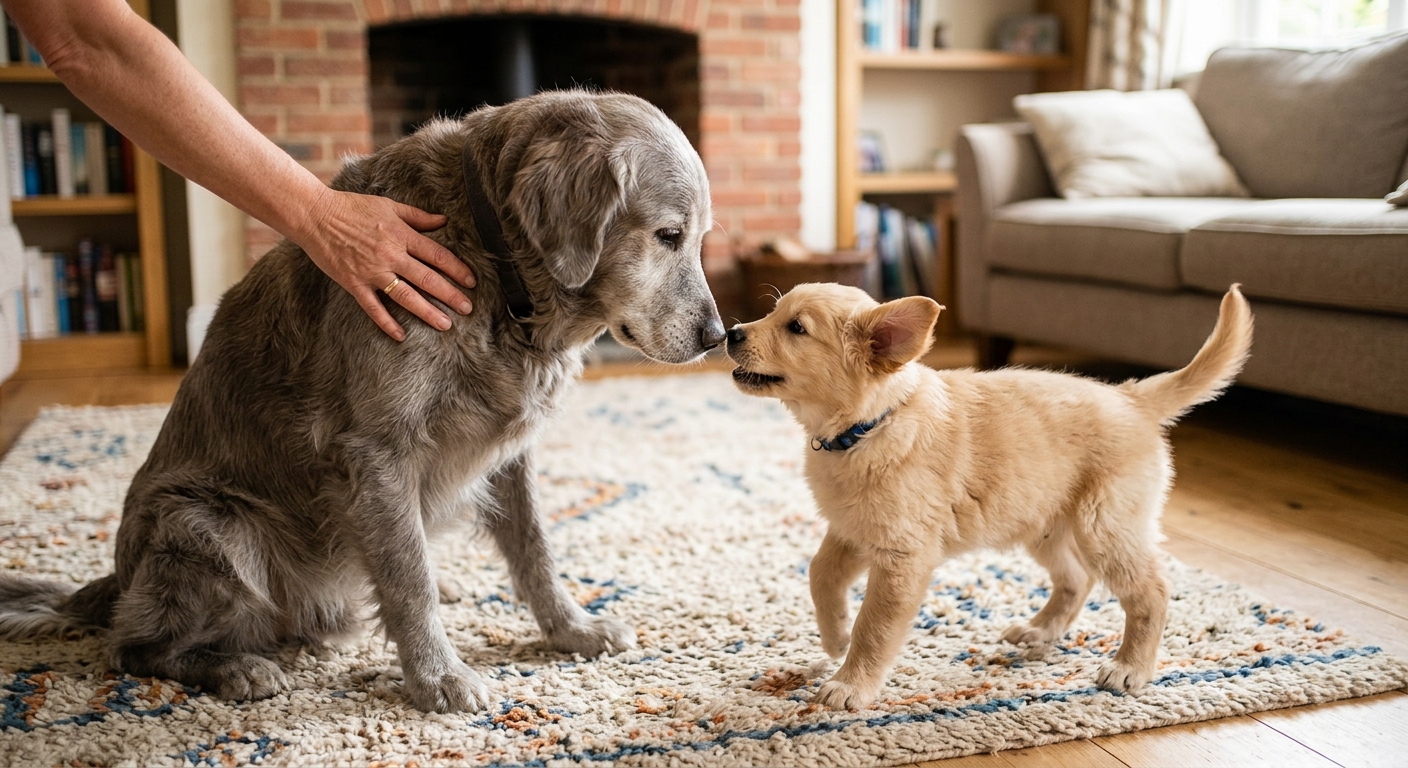
Bringing a new puppy into your home is an exciting time, filled with boundless joy, playful antics, and a fresh wave of love. But if you already share your life with a wise, senior canine companion, the introduction needs to be handled with care, patience, and a positive, thoughtful approach. At PetTrain360, we believe in creating harmonious multi-dog households, and that starts with a safe, stress-free introduction for everyone involved. Let's ensure your new puppy and your beloved elderly dog become the best of friends!
Why a Thoughtful Introduction Matters
An elderly dog often cherishes their routine, peace, and comfort. A rambunctious puppy can be a significant disruption. Without proper management, this can lead to stress for your senior dog, potentially affecting their health, or even fear and anxiety for the puppy. Our goal is to foster a relationship built on respect and positive experiences, ensuring your senior dog feels secure and your puppy learns appropriate social manners from day one.
Before the Paws Meet: Preparation is Key!
Success starts long before the puppy crosses your threshold. Preparing your home and your senior dog will set the stage for a smooth transition.
- Vet Check-Up for Your Senior: Ensure your older dog is in good health. Arthritis, diminished sight or hearing, or other age-related conditions can affect their tolerance levels. Consult your vet to manage any discomfort they might experience.
- Create Separate Spaces: Establish distinct, safe zones for each dog. Your senior dog should have their tranquil retreat where they can escape the puppy's energy, and your puppy needs their own secure spot, like a crate training setup. This is crucial for managing their initial interactions and providing necessary downtime. For a comprehensive guide on setting up your home, check out The First 48 Hours: How to Set Up Your House Before Bringing a Puppy Home.
- Scent Swapping: Before they even see each other, let them get acquainted through scent. Swap blankets or toys between their separate spaces. This allows them to become familiar with each other's smell in a non-threatening way.
- Puppy-Proof Your Home: A curious puppy will get into everything! Ensure your home is safe for both dogs, removing small objects or anything your senior dog might accidentally ingest if the puppy plays with it. Consider our guide on How to Teach "Leave It" for future safety.
The Grand Introduction: Slow and Steady Wins the Race
When the big day arrives, remember that patience is your most valuable tool. Keep initial interactions brief, positive, and always supervised.
Step 1: Neutral Territory & On Leash
The very first meeting should ideally happen in a neutral, outdoor space – like a park or a friend's fenced yard – where neither dog feels possessive of territory. Both dogs should be on leashes, handled by separate adults if possible, to ensure control and safety. Keep a relaxed leash; tension travels down the lead!
- No Nose-to-Nose: Initially, allow them to sniff each other from a distance, perhaps walking parallel to each other.
- Positive Reinforcement: Shower both dogs with praise and high-value treats for calm behavior. Keep the atmosphere light and happy. If your puppy starts to exhibit excessive whining for attention or barks persistently, it might be a sign they're overstimulated; shorten the session.
- Keep it Short: The first meeting should last only a few minutes. End on a positive note before either dog shows signs of stress or overexcitement.
Step 2: Supervised Home Interactions
Once they've had a few positive neutral-territory interactions, you can bring them home, but supervision remains paramount.
- Leashed & Controlled: Inside, continue to use leashes for controlled interactions in a common area.
- Boundaries for the Puppy: Teach your puppy that your senior dog's space (bed, food, water) is off-limits. Use gates or pens to physically separate them when you can't actively supervise. This prevents the puppy from constantly pestering the older dog.
- Manage Energy Levels: Puppies have bursts of energy, often called "the zoomies", which can overwhelm an older dog. Ensure your puppy gets plenty of exercise and mental stimulation (like brain games) before interaction time to help them be calmer.
- Positive Associations: Always associate the other dog with good things. Feed them (separately but in sight) or give them treats when they are calmly together.
- Handle Gently: Remember, your older dog might be more sensitive. Teach your puppy appropriate social manners and the difference between soft mouth play vs. true frustration. For handling your puppy in general, including for future vet visits, consider The Golden Rule of Handling.
Step 3: Ongoing Management & Building the Bond
The introduction isn't a one-time event; it's an ongoing process of management and fostering positive relationships.
- Never Leave Unsupervised: Especially in the early weeks and months, never leave your puppy and senior dog alone together, even if things seem to be going well. Accidents can happen quickly. This also helps prevent common issues like puppy separation anxiety from developing if they become too reliant on each other.
- Respect the Senior's Space: Always advocate for your senior dog. If they signal they need space (turning away, yawning, lip licking, growling – which is a warning, not aggression), immediately intervene and redirect the puppy.
- Encourage Calmness: Reward calm behavior from both dogs. If the puppy tries to jump on the senior, gently redirect them to a toy or a "place" command. Explore Platform Training for teaching precise positions and calmness.
- Continue Socialization for Puppy: While they build a bond, ensure your puppy also gets varied, positive experiences with other dogs and environments, following a Fear Free Socialization Checklist.
- Individual Attention: Make sure both dogs receive individual attention, play, and training sessions with you. This reinforces their bond with you and prevents jealousy. A 10-Minute Daily Training Session can work wonders for both!
When to Seek Professional Help
While most introductions go smoothly with patience, some situations may require expert intervention. If you observe any of the following, consult a professional positive reinforcement dog trainer or veterinary behaviorist:
- Consistent growling, snarling, or snapping from the senior dog that doesn't resolve with management.
- The puppy relentlessly harassing the senior dog despite your interventions.
- Any actual fights or injuries.
- One or both dogs showing significant signs of chronic stress, anxiety, or depression.
Embrace the Journey
Introducing a puppy to an elderly dog is a journey, not a sprint. There will be moments of joy, a few bumps, and countless heartwarming interactions. By prioritizing safety, positive reinforcement, and understanding each dog's needs, you're paving the way for a beautiful, multi-generational canine friendship. Remember, you're the leader of your pack, guiding them towards a happy, harmonious life together. Happy training!