
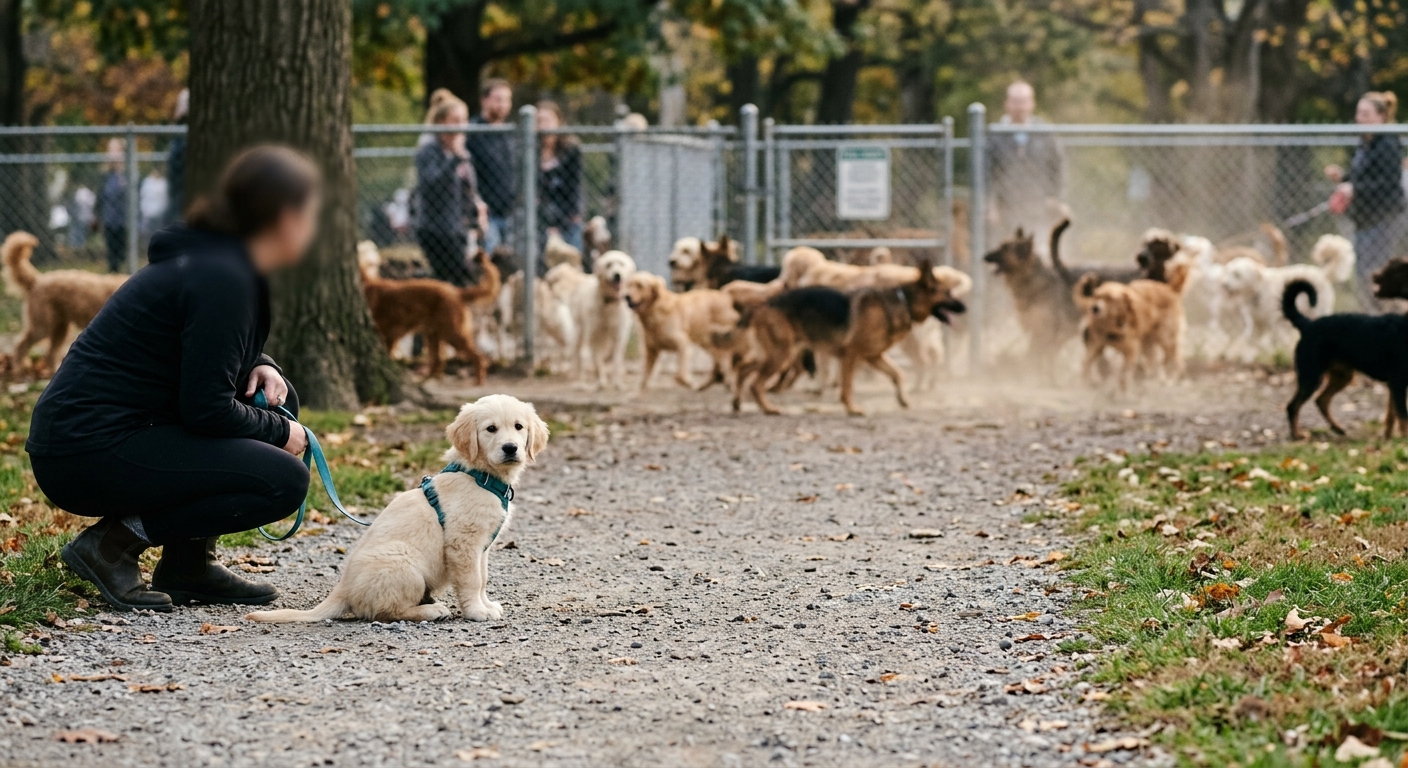
As excited new puppy parents, we all want to give our furry little bundles of joy the very best start in life. Visions of frolicking in wide-open spaces, making friends with other dogs, and burning off endless puppy energy often lead us to consider the local dog park. It seems like the perfect solution, right? However, when it comes to puppies under six months old, the dog park can actually be more detrimental than beneficial. At PetTrain360, we advocate for positive, controlled, and safe experiences, especially during these crucial developmental stages.
Why Dog Parks Are Not Ideal for Puppies Under 6 Months
While the intention is good, taking a young puppy to a public dog park can expose them to a range of risks, from health concerns to potentially lasting behavioral issues. Let's explore why holding off on dog parks for a few more months is a wise choice.
1. Health Risks: Immunity and Disease Exposure
Puppies are incredibly vulnerable to illness. Before they complete their full vaccination series (typically around 16 weeks of age), their immune systems are still developing. Dog parks, by their very nature, are high-traffic areas where dogs of all vaccination statuses congregate. This creates a prime environment for the spread of:
- Parvovirus and Distemper: Highly contagious and often fatal diseases that can be picked up from contaminated soil, feces, or direct contact.
- Kennel Cough: While not usually life-threatening, it's highly unpleasant for both pup and owner.
- Parasites: Fleas, ticks, and intestinal parasites can easily be transmitted in communal outdoor spaces.
Even after their initial vaccinations, a puppy's immunity needs time to build robust protection. It's always best to consult your veterinarian about when your puppy is fully protected and ready for more diverse environments.
2. Behavioral Pitfalls: Overwhelm, Fear, and Negative Associations
A dog park can be an incredibly stimulating, and often overwhelming, environment for a young, impressionable puppy. This isn't the kind of positive socialization we strive for!
- Too Many, Too Fast: Imagine being a tiny toddler thrown into a playground with dozens of rowdy teenagers. That's often how a dog park feels to a puppy. They can easily become overwhelmed, leading to fear or anxiety.
- Inappropriate Play Styles: Not all dogs are good with puppies. Larger, older, or less-socialized dogs might play too roughly, ignore a puppy's signals, or even act aggressively. A single negative encounter can have long-lasting effects, potentially leading to reactivity or fear of other dogs down the road. It’s crucial to understand how to distinguish between puppy play bites and true frustration.
- Critical Fear Periods: Puppies go through "fear periods" (often around 8-11 weeks and again between 5-12 months) where negative experiences can be particularly impactful and create lasting phobias. Exposing them to unpredictable, high-stress situations during these times is risky.
- Lack of Control: In a busy dog park, you have minimal control over who your puppy interacts with or the quality of those interactions. Positive reinforcement training relies on setting your puppy up for success, something that's difficult to achieve in such an uncontrolled setting.
Instead of fostering healthy social skills, such experiences can lead to a puppy who is fearful, anxious, or develops defensive behaviors towards other dogs.
3. Missed Opportunities for Controlled Socialization and Learning
Socialization is absolutely vital for puppies, but it's not about quantity; it's about quality. The goal is to create positive associations with new sights, sounds, people, and other calm, appropriate dogs. This is best achieved in controlled, low-stress environments.
- Structured Puppy Classes: These are fantastic! They offer a safe, supervised environment for puppies to interact with others their own age and size, under the guidance of experienced trainers. It’s also a great place to begin zero-distraction leash training in a novel environment.
- One-on-One Playdates: Arrange playdates with known, vaccinated, gentle adult dogs or other puppies whose temperament you trust. This allows for supervised interactions where you can intervene if play gets too rough or one dog becomes uncomfortable. If you have an older dog at home, learn how to introduce a puppy to an elderly dog safely.
- Positive Exposure to the World: Take your puppy on walks (in safe, low-traffic areas after vaccinations), car rides, and to pet-friendly stores where you can manage their interactions. Focus on positive experiences with new sounds, textures, and smells. A comprehensive resource like the Fear Free Socialization Checklist can guide you through the crucial experiences your puppy needs before 16 weeks.
- Early Training is Key: Use these early months to focus on foundation behaviors like polite greetings, recall, and impulse control. You can also work on teaching "Leave It", which is a life-saving cue. Establishing strong positive associations with you, their handler, and the world is far more important than random dog park interactions.
Better Alternatives for Puppy Exercise and Socialization
Don't worry, keeping your puppy away from the dog park doesn't mean they'll be bored or unsocialized! There are many wonderful, safer ways to meet their needs:
- Safe Walks: Once cleared by your vet, explore different neighborhoods, quiet trails, or parks during off-peak hours. Focus on sniffing and exploring rather than intense social interaction.
- Indoor Play: Your home and yard offer plenty of space for games of fetch, tug, and hide-and-seek.
- Mental Stimulation: Enrichment activities and brain games can tire a puppy out faster and more effectively than physical exertion alone. Puzzle toys, training sessions, and scent work are fantastic.
- Supervised Interactions: As mentioned, puppy classes and carefully curated playdates are invaluable. Remember that it's important to help them learn to settle down, too, and understand your puppy's energy cycles to prevent over-overtiredness.
- Exposure to Sounds & Sights: Use car rides, walks on a secure leash, and even television/radio to expose your puppy to a wide variety of stimuli in a controlled, positive way. Remember to provide positive handling experiences early on to prepare them for vet visits and grooming.
The PetTrain360 Philosophy: Patience and Positive Foundations
At PetTrain360, we believe in setting your puppy up for a lifetime of success, joy, and confidence. This means prioritizing their health, safety, and emotional well-being above all else. By patiently guiding them through controlled, positive experiences during their formative months, you're building an incredibly strong foundation for a well-adjusted adult dog.
Trust in the process, lean on your veterinarian for health advice, and turn to PetTrain360 for expert, positive-reinforcement training guidance. Your puppy will thank you for it!