
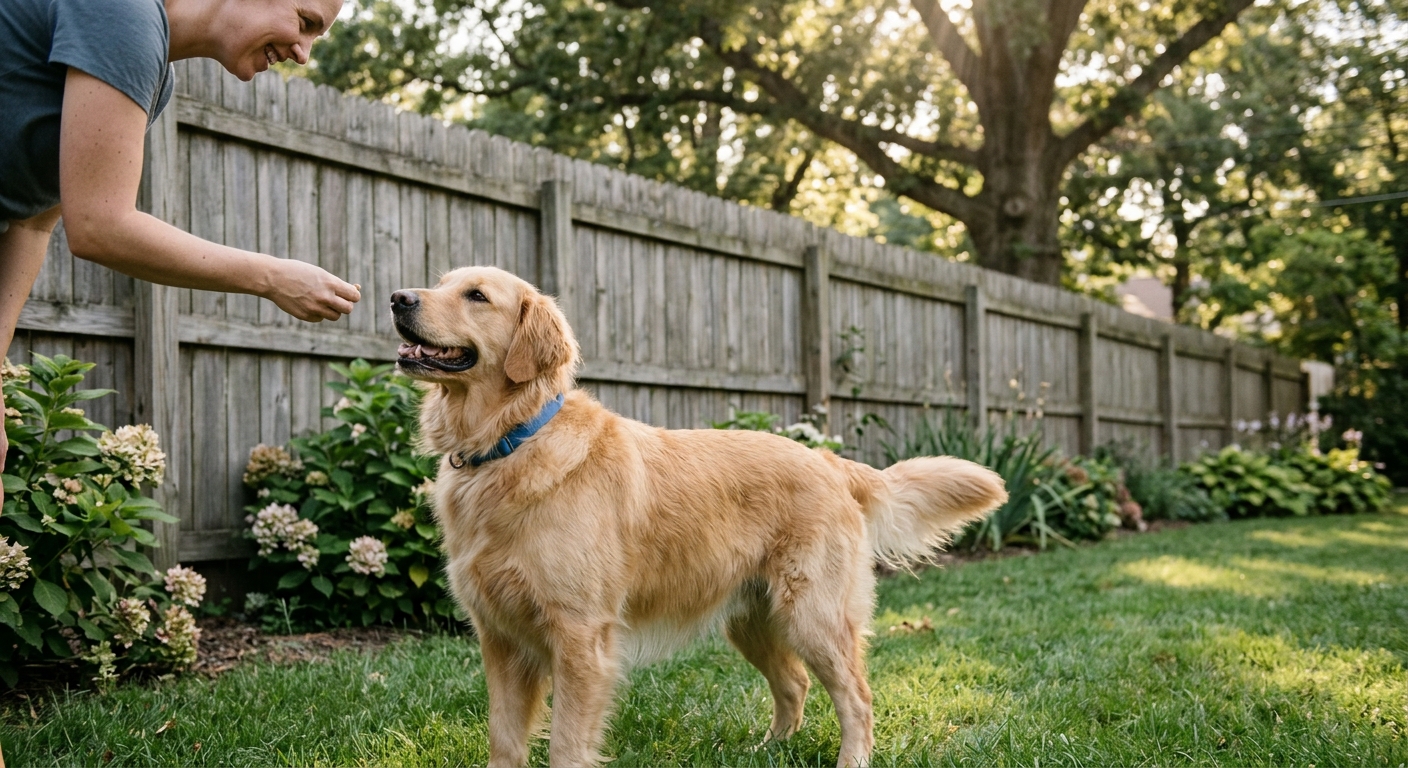
Tired of the Backyard Barking Battle? Master Barrier Frustration with Positive Training!
Is your dog turning into a barking, lunging maniac at the mere sight of a passerby or another dog beyond your backyard fence? You’re not alone! This common behavior, often called “barrier frustration,” can be incredibly stressful for both dogs and their human companions. At PetTrain360, we believe in understanding the 'why' behind the behavior, so we can equip you with positive, effective strategies to transform fence-line chaos into calm backyard bliss. Let's dive in!
What Exactly Is Barrier Frustration?
Barrier frustration occurs when your dog wants to greet, play with, or investigate something on the other side of a barrier (like a fence or even a leash) but can't. This inability to reach their desired target leads to intense frustration, which often manifests as barking, lunging, whining, or even growling. While often mistaken for aggression, it's frequently a manifestation of frustration or anxiety, and it's crucial to understand this distinction for effective training.
Why Positive Reinforcement is Your Best Tool
Remember, our approach at PetTrain360 is always rooted in kindness and building trust. This means unequivocally avoiding harsh, outdated methods like shock and prong collars, which only suppress behavior and damage your dog's emotional well-being. Similarly, techniques like the "alpha roll" can severely erode the trust you've built. Positive reinforcement helps your dog learn what to do instead of simply punishing what they shouldn't, fostering a happy, confident companion.
Step-by-Step Solutions for Fence-Line Frustration
1. Environmental Management: Setting Your Dog Up for Success
- Create Visual Barriers: If possible, install privacy screens, grow dense hedges, or add decorative lattice to block your dog's view of triggers. "Out of sight, out of mind" is powerful!
- Supervised Yard Time: Don't leave your dog unsupervised in the yard, especially during peak trigger times (e.g., mail delivery, school dismissal). Your presence allows you to intervene and redirect before frustration escalates.
- Strategic Scheduling: Walk your dog or provide focused playtime during times when fewer triggers are present along the fence line.
- Boost Enrichment: A bored dog is often a reactive dog. Ensure your dog's mental and physical needs are met with plenty of engaging activities. Discover great ideas in our article on enrichment for dogs.
2. Positive Training: Changing Associations and Behaviors
a) Build a Strong Foundation (Indoors & Calmly)
Before tackling the fence, ensure your dog has a solid foundation of basic cues in a distraction-free environment. Practice "sit," "stay," "come," and a solid "leave it." Just as we advocate starting with leash training indoors, you'll want to begin your fence-line training in a low-distraction environment, gradually increasing difficulty.
b) Desensitization and Counter-Conditioning
This is where we change your dog's emotional response to the triggers. Instead of seeing a dog pass by and feeling frustrated, we want them to feel happy and look to you for a reward!
- Find the Threshold: Identify the distance at which your dog notices a trigger but doesn't react. This is their "happy spot." You might start far from the fence.
- "Mark and Reward": The moment your dog spots a trigger (e.g., a person walking past) without reacting, immediately "mark" the behavior with a verbal marker like "Yes!" or a clicker, and then reward them with a high-value treat.
- The "Look at That" Game: One of the most effective tools for this is the "Look at That" game, which helps your dog associate the sight of a trigger with positive rewards. You teach them to look at the trigger, then immediately look back at you for a treat.
- Gradual Approach: Slowly decrease the distance to the fence or increase the intensity/frequency of triggers as your dog consistently remains calm. Always work below their threshold.
c) Teach Alternative Behaviors
Instead of barking at the fence, what do you want your dog to do?
- "Go to Mat/Place": Train your dog to go to a designated mat or bed (placed away from the fence) when they hear or see a trigger. Reward heavily for staying on the mat. (This is similar to the principles behind training for doorbell meltdowns).
- Retrieve a Toy: Encourage your dog to grab a favorite toy and bring it to you, or engage in a brief play session, as a distraction from the fence.
- Check-Ins: Reward your dog for voluntarily looking at you while near the fence, even without a specific command. This builds engagement and focus on you.
d) Leash Work Near the Fence
Practicing on a leash can give you more control and a safe way to manage interactions. Many of the principles for managing barrier frustration are similar to those used when learning how to walk a reactive dog in a busy environment. Use a long line (10-15 ft) to give them some freedom while still maintaining supervision, practicing your "Look at That" game and rewarding calm behavior.
Consistency and Patience are Key!
Overcoming barrier frustration takes time, consistency, and a whole lot of patience. Celebrate small victories, don't get discouraged by setbacks, and always remember to end training sessions on a positive note. With PetTrain360's positive reinforcement techniques, you'll be well on your way to a more peaceful backyard for you and your beloved companion!